





 4.5/5
4.5/5 独行舟
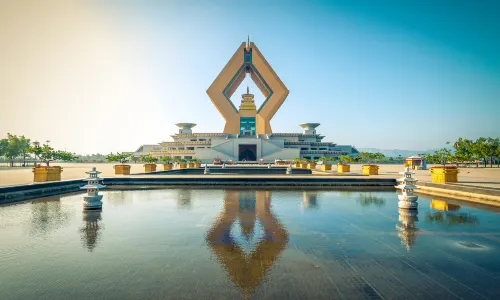
独行舟Famen Temple was built in the Hengling Year of the end of the Eastern Han Dynasty (147 ~ 180). The three years of the emperor (583) changed the name of "Chengshi Daochang", and the first year of Tang Wude (618) Gaozu Li Yuanxuan name "Famen Temple", which has been used to this day. Famen Temple is built because of the Sheli and the temple is built because of the tower. Since Tang Xianqing four years (659) Tang Gaozong first welcomed the Buddha refers to Sheli to Tang Xiantong 15 years (874) Tang Yuzong sent back the Buddha refers to Sheli, the Tang Dynasty has Gao Zong, Wuhou, Zhongzong, Suzong, Dezong, Xianzong, and Yuanzong eight emperors six Ying and two sent to support Famen Temple Buddha refers to Sheli. Famen Temple built the tower because of the support of the Buddha refers to the Sheli, because the tower became the temple, from 1800 years ago "Holy Temple" to the Sui and Tang Dynasty to the construction of the wooden tower to Ming Longqing three years (1569) to the collapse of the wooden tower, Ming Wanli 37 years (1609) to the eight-point thirteen-level brick tower. In 1981, the pagoda half wall collapsed, in 1987 the Famen Temple real pagoda was rebuilt, four Buddhas pointed to the Sheli and 2,499 pieces of Datang national treasure re-created the world, in 1988, the original real pagoda was completed, Famen Temple opened to the outside world. Heshi Sheli Tower, the tower is 148 meters high, and the shape is two hands. In May 2009, Heshi Sheli Tower, 1,230 meters of Buddha Guang Avenue, and 2 100,000 pilgrimage squares were all completed and opened. Heshi Sheli Tower is divided into ground and ground palace parts, and the ground part is built with Buddhist three Buddhas, Bodhisattvas from all sides, and the four kings of heaven and other Buddhist cultural landscapes. The Buddha's true finger bones are stored in the middle hall of the Sheli Tower. Famen Temple Museum, based on the Famen Temple site, based on the archaeological finds of the Tang Dynasty Buddha Tower and the museum with the characteristics of the Datang Palace treasures and Buddhist art. At present, the museum has 9,439 cultural relics, of which 138 cultural relics are first-class, the exhibition hall is divided into historical and cultural hall, treasure pavilion and gold and silverware grand view, the exhibition cultural relics include Shelibao letter, gold and silverware, Buddhist instrument, secret color porcelain, glassware, silk and other rare treasures.
 4.7/5
4.7/5 大 牛
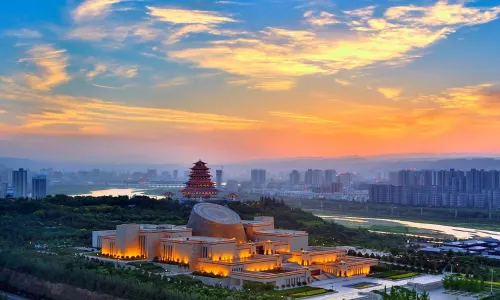
大 牛Baoji Bronze Museum is located in Weibin District, Baoji City, Shaanxi Province. It is located in the China Stone Drum Garden, a national scenic spot on the northern foot of Qinling Mountain and the south bank of Weihe River. You have to make an appointment to enter the museum. I have time to make an appointment directly at the door. The collection is very rich. It is just that the flowers are hard to see, and the most cattle in the collection: the first appearance of the "China" clause in the history is in the collection of "He Zun"! "He thinks Zun, I have China", the museum's hall Ming are proud!
 4.5/5
4.5/5 cxqdwd
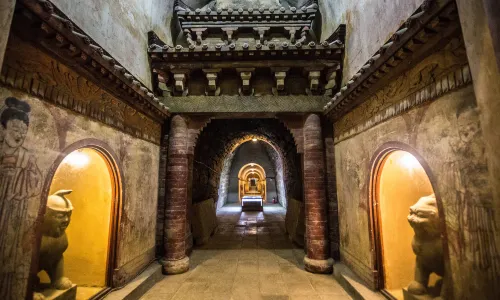
The tomb of Li Maozhen, an important military governor of the late Tang Dynasty, and his wife. Because of past looting, protective excavations have been carried out. Both tomb passages are covered with murals. In particular, the passageway of Li Maozhen's tomb retains much of its original color, and the figures are vividly portrayed. The brick carvings of the twelve zodiac animals and eighteen musicians in Li's tomb are exquisite examples of brick carving from the Sui, Tang, and Five Dynasties. The brick carvings of the flying eaves and the end towers in his wife's tomb are rare, and the brick carvings of sedan chairs and horses are also exquisite. With the exception of two replica stone coffins, the rest of the murals, brick carvings, and funerary objects are essentially originals, possessing high historical and artistic value. The entrance fee is 45 yuan, which is quite worth it.
 44.2/5大 牛
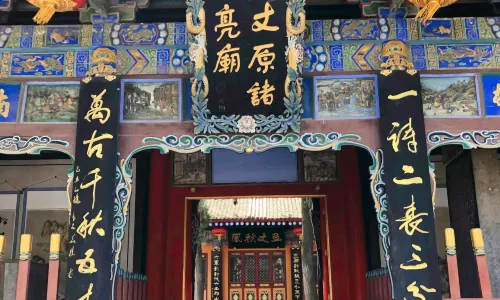
He did his best, and died, and the Xiang did it! In China, he only thought of Zhuge Xiang, he did his own age teacher table, and finally exhausted everything for the Han, Wuzhangyuan, Cang Bosenran, Mr. really a model of the Chinese!
 54.3/5
 李漂亮一家
李漂亮一家1. Generally, the magic carpet is enough, and no cable car ticket is needed. Advanced players are not included; 2. Beginners must hire a coach, otherwise it’s just a show; 3. Food and drink are all available, the snow is clean, and there are different zones. It’s a pretty good ski resort.
 64.4/5
 WH1962
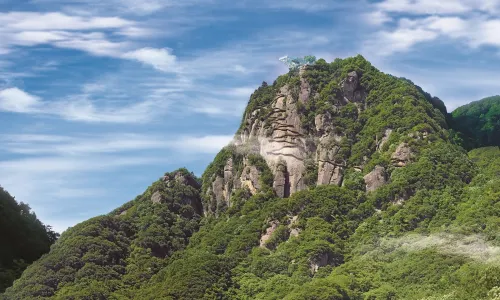
Honghe Valley National Forest Park is located in Yingtou Town, Meixian County, Baoji City, Shaanxi Province, located in the northern foothills of Qinling Mountain, about 120 kilometers away from Xi'an. It is a component of Taibai Mountain National Forest Park, known for its steep landscape, waterfalls and glacier relics. Highlights: 1. Doum Falls: The drop is about 80 meters, and the water mist is filled. The rainy season is particularly spectacular. 2. Red River Danya: famous for the red rock walls and sea of clouds, and the best shooting time in the evening 17:00-19:00. 3. Sizui Mountain Observation Deck: It can be reached by cableway, overlooking the Guanzhong Plain and Taibai Snow. 4. Double-hole water curtain: explore the rainbow landscape of the cave water curtain. Tickets: 60 yuan for the peak season (April 1-October 31), 120 yuan for the ropeway round-trip: half price for students and elderly vouchers. 0 Open time: 8:00-18:00 (no rest throughout the year)
 74.6/5
 Anonymous user
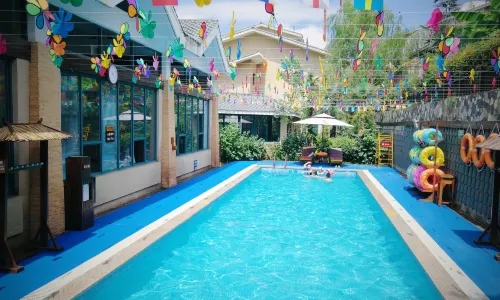
There are many hot spring pools here, you can choose any one, the water quality looks good, the temperature is about 30-40 degrees, each pool is different. The water in the fish therapy pool is a bit dirty, the fish poop is visible in the water... There is a small swimming pool here, the water is a bit shallow and the water temperature is a bit high, so it is hard to swim.
 84.4/5
 M27***06
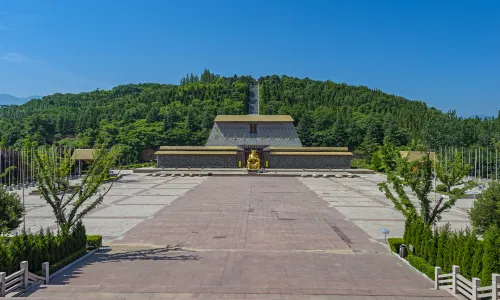
Yandi Mausoleum is located on the Changyang Mountain in Shennong Town, Weibin District, Baoji City, and is the main place for Yanhuang's descendants to find roots and sacrifice their ancestors. It is said that Yandi was born on the shore of Jiangshui (now Baoji City) from 6,000 to 5500 years ago. With the development of history, his descendants migrated southeast along the Lishui to Hubei, Hunan, Shanxi and other places. In a broad sense, Yandi is a clan tribe with several generations. Therefore, there are five Yan Emperor's hometowns in the country. Among them, Yan Emperor 1 and 2 all live in Baoji, Shaanxi. If according to the first, Yan Emperor only exists in Baoji. Baoji is the hometown of Yan Emperor, and is one of the birthplaces of the Chinese nation. The Yandi Mausoleum is a holy place integrating history and culture, ritual and natural scenery. From Jiang Castle to the entrance of Tiantai Mountain, there are many ancient archways along the way. The book praises the words of Yan Emperor. Enter the sacrifice area when you step into the mountain gate. The 100-meter steps lead directly to the Lingtai. The stone in the top of the mountain is remembered in history. The temple of Yandi Temple is magnificent, and the praise of Yandi's achievements is celebrated. The square can accommodate thousands of people to sacrifice. The main hall has a solemn and merciful statue of Yandi. The mural details the life and achievements of Yandi. Every year, on July 7 and Qingming Festival, people at home and abroad gather this public sacrifice to worship the first ancestor of the humanities, the scene is solemn and solemn, and it is a heart to admire.
 Famen Temple Cultural Scenic Area Implements Off-Season Ticket Policy | Dec 1, 2025-Feb 28, 2026

 No. 1 of Ski Resorts in Baoji