





 4.7/5
4.7/5 拖着箱子追日落
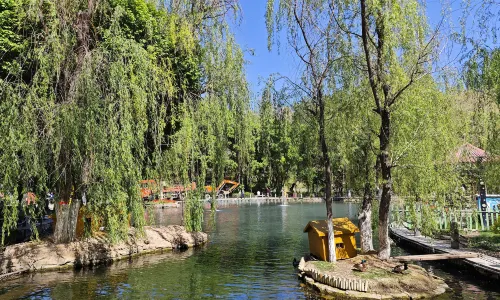
Shuimogou (Water Mill Gully) gets its name from the watermill built here by Qing Dynasty troops. The park boasts numerous historical sites, and poems left by literati such as Ji Xiaolan add to its cultural significance. The scenic area comprises five mountains and one river, including Qingquan Mountain and Hongqiao Mountain. The Shuimo River flows through it, its course dotted with springs, streams, waterfalls, and emerald pools, offering diverse scenery in each season: spring for flowers, summer for escaping the heat, autumn for red leaves, and winter for snowscapes, the latter being particularly delightful. The area is known as a "natural oxygen bar in the city." Admission is free.
 4.6/5
4.6/5 青青岛-
青青岛-Urumqi is truly a magical place. The temperature is high, but the humidity is minimal. During the day, walking along the botanical garden path, there's a slight coolness, which is incredibly comfortable. The park isn't very large, but it's right next to the flower market. Admission is free, and there are various markets on weekends. The main attractions are the playground and the petting zoo. The playground, needless to say, has age-appropriate seating. The petting zoo is also quite large, offering animal feeding, simple non-powered equipment, and other interactive activities. There were virtually no mosquitoes in the botanical garden, and many families brought their tents to relax and have fun on the grass!
 4.6/5
4.6/5 学校🏫
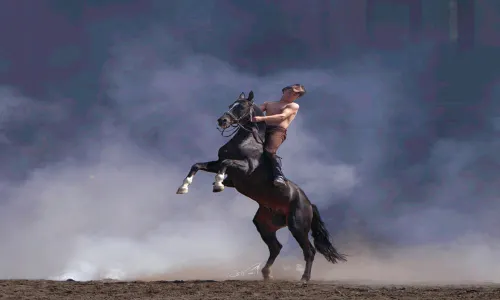
学校🏫Xinjiang Ancient Ecological Park·Sweat and Horse Base: A live epic on the Silk Road This gene treasure house hidden in the city, with sweat and blood as the key, has stirred the dialogue of Asian and European civilizations spanning two thousand years. When the hoofs of the nomads of the Bronze Age hit the modern genetic map, it was no longer a horse farm, but a spiritual laboratory for decoding grassland civilization. The blood veins of living artifacts fancied 38 purebred sweat horses such as flowing bronze sculptures, muscles in the running of the legendary "blood" sweat beads shimmering. Through the glass curtain wall of the Horse Culture Museum, the Han Dynasty - Jinma decoration and DNA testing reports - those who once made the Han Wu emperor crazy "Tianma" bloodline is resurrected in the chromosome spiral. On the equestrian performance venue, riders and Hummer recreate the epic scene of Dawan's horse, and the yellow sand rolls in the leap, as if Zhang Shu's festival is still hunting in the wind. The millennium silica wood forest and meteorite group in the space-time martyrdom park where civilization collided constitute a geological wonder, and the Kazakh herdsman eagle taming performance is more magical in the context of Jurassic tree fossils. In the Mustang Art Museum, Xu Beihong's "Ben Matu" and nomadic rock painting form a cross-time and space dialogue, and the VR equipment can make people instantly cross to Wusun Ancient Road, feel the hot nose of sweat and blood horses breaking through the siege of Hunnu. Immersive horseback narrative Dawn breaks into the stable, hand-combing the stable when touching the silk-like skin of the Aharje Jinma; dusk riding class uses Kazakh password to control the horses, every step is the rhythm of the grassland ancestors. It is recommended to stay in the starry night, when the laser projection will turn the stable into the ancient road of the Western Region, the sound of the horse head piano and the holographic camel dance, at this moment you drink the horse milk wine, has fermented into a semi-drunk epic. As a rare global blood-sweated gene bank, the most precious here is not a BMW worth tens of millions, but to make civilization immortal in the cicadas. When you see a civilization in the embryo freezer tube in the breeding laboratory, or the arrows in the riding field overlap with the history textbooks, you suddenly realize that the so-called Silk Road is nothing more than the ambition and romance of the world by the horseshoe.
 4.6/5
4.6/5 _TI***by
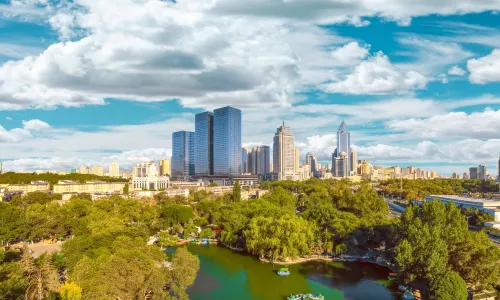
nice park to see the view of Ürümqi city in many angles and so many attractions and activities for all people.
 4.8/5
4.8/5 M44***83
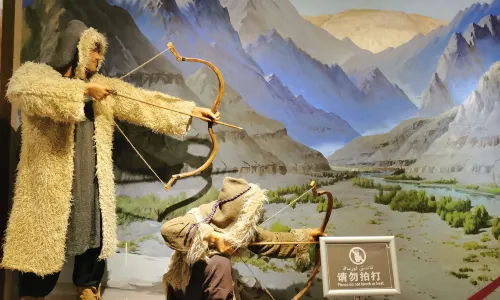
Seeing the five-star Oriental Li China tapestry arm, the river princess dry body, the turtle mural, did not see the Loulan dry body. Out of the main entrance of the museum, there is a small shop "Abu Dujiao rice", the taste can be, especially the glass bottled apricot peel tea tastes good, slightly sour and sweet, greasy and thirsty, but unfortunately did not take pictures of the drink brand.
 4.5/5
4.5/5 充实体验
充实体验Step into the Grand Bazaar and be instantly surrounded by lively and bustling. The colorful buildings are full of exotic customs, and the air is filled with the aroma of food. The stalls are rich in goods, from exquisite handicrafts to special dried fruits, which makes people picky. And the price is close to the people, you can get full of things just strolling around, it's really good to go shopping!
 4.6/5
4.6/5 皮瑞伯德易牙
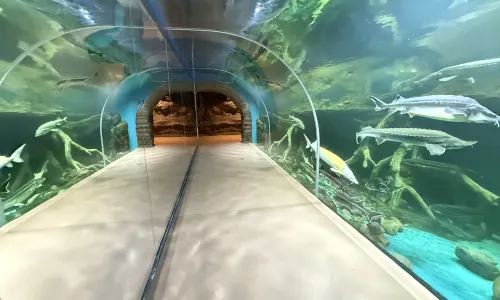
The environment is very good, there are many kinds of animals, there are animal performances and children's interactions. It is a good place to take the kids out. It is worth seeing marine animals in the inland areas of Xinjiang.
 4.2/5
4.2/5 yxj003
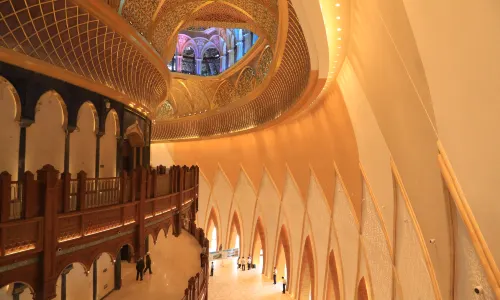
There are two versions, 50 and 75 minutes, with prices varying depending on the number of seats. The 50-minute version features eight or nine festivals, and in addition to the stage performances, there are also performances close to the audience. The actors are very dedicated, and the program is mainly song-based, with no plot, focusing on the customs and culture of Xinjiang.
 4.8/5
4.8/5 鱼儿看世界
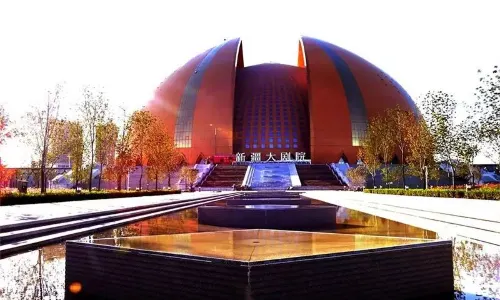
鱼儿看世界The Xinjiang Grand Theatre is located in Changji, 33 kilometers from Urimqi. A half-hour taxi ride away, the large-scale performance "Return to the Western Regions" is worth seeing. The theatre's building, resembling a golden snow lotus, is a beautiful sight.
 4.4/5
4.4/5 难 得糊 涂
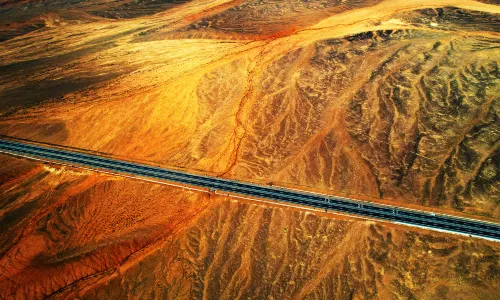
The Gurbantunggut Desert, located in the central Junggar Basin of Xinjiang, is China's second-largest desert (approximately 48,800–51,000 km²) and the largest fixed or semi-fixed desert in China (97% of the dunes are stabilized by vegetation or biocrusts). It lies at an altitude of 300–600 meters, receives a stable snow cover of 10–30 cm in winter, and receives 70–150 mm of annual precipitation. The western mountain passes bring in moisture, nurturing over 300 species of psammophytes, creating a rare "desert oasis." Landscape: 1. Fixed Dune Community: Haloxylon ammodendron, Ephedra sinica, Tamarix tamarisk, and Calligonum mongolicum cover 40–50%. In spring, ephemeral plants bloom in April–May, while in autumn, poplars and Haloxylon ammodendron turn golden yellow in September–October, making it a prime photography season. 2. Honeycomb/Girder-Shaped Dunes: Symmetrical circular and gridded sand ridges appear extensively in the central and southern regions, resembling "earth honeycombs" and offering excellent aerial and aerial photography opportunities. 3. Wildlife: Goitered gazelles, hares, foxes, wolves, wild camels, and migratory birds. 4. Cultural relics along the Silk Road, such as the Beiting Protectorate ruins, Tudunzi Mosque, beacon towers, and Maqiao Ancient City, are scattered along the desert edge. Light hikes with cultural tours are available. Entry must be made within approved areas by national and local governments, and all regulations must be followed. Extreme safety precautions must be observed, including when driving along highways.

