





 4.6/5
4.6/5 Geoffrey_CZ
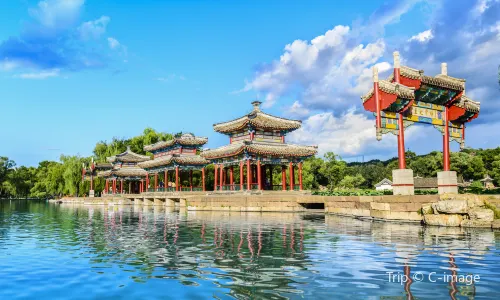
I was a little disappointed by the mountain resort area itself. It is nice, but definitely not worth the entrance price. (First 2 pics) The summer palace in Beijing is really nicer. However, the Putuo temple, Xumi temple and the Puning were definitely worth the trip. I loved them all. (7 other pics).
 4.5/5
4.5/5 A.Low
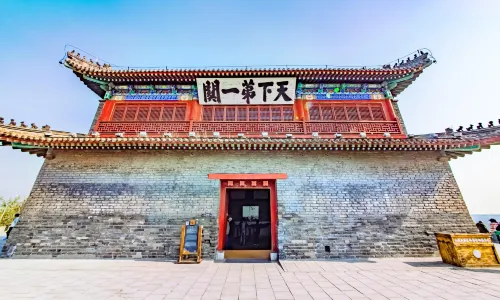
A.LowOverall its an interesting attraction to visit, but subject to weather conditions. The service staff attitude is meh (wonder if they dont know how to deal with international tourists and make you feel like you are weird) but you can ignore them and just enjoy the scenary
 4.5/5
4.5/5 qingchensos
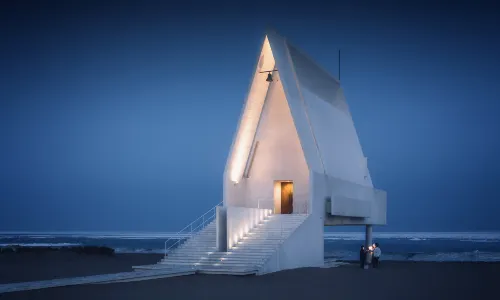
This is a place worth visiting, suitable for a person to relax, girlfriends to meet, couples to date. In the morning, stroll by the beach to enjoy the sunrise, and enjoy the lonely auditorium at night. It is really lonely. In quiet times, children may prefer to play and play on the beach. A shot is a blockbuster. There are several canteens in the community, the dishes are rich in variety and the taste is very good. The most convenient thing for staying guests is that there is a hotel shuttle bus, which is very convenient and the gospel of lazy people.
 44.7/5
 Andrew Beagrie
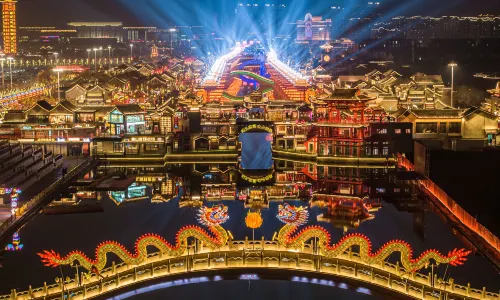
About 30 minutes from Tangshan city centre, this wonderful ancientstyle water town has a lot to do. Night views are amazing. The boat cruise and the awesome live show are recommended. So many shops and different food stalls. You could easily spend a full day here but it's probably best to come once during the day and once at night. Can get VERY crowded on weekend nights. Overall, well with
 54.0/5
 300***06
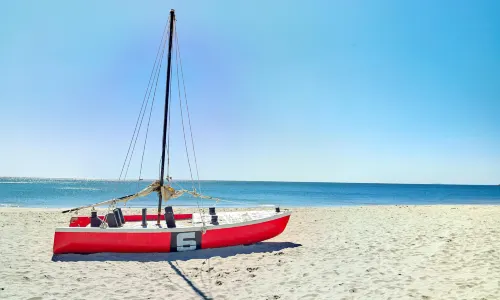
Well, I went to Qinhuangdao for a few days. Actually, there is nothing special about Siam Island. The scenery is mainly for the cable car that crosses the sea. I have never done this cable car before. I took my children to play around. If you go, I recommend getting up before 6:30 in the morning. There are too many people, especially during summer vacation.
 64.8/5
 M52***87
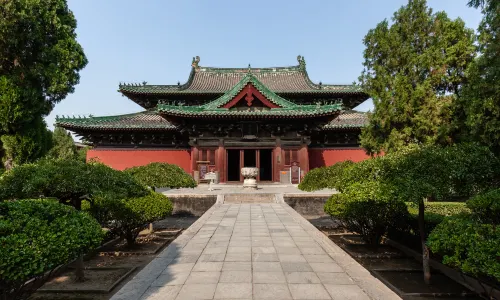
Oriental beauty god, well-deserved! Beautiful no matter which angle! so beautiful! The architectural style of Mani Temple is also very unique! Worthy of being the architecture of the Song Dynasty! The murals on both sides are also beautiful, the ghost and mother sky are completely gentle and beautiful lady image... The rare bronze double-sided Buddha statue in the ring is a huge Song Dynasty wooden wheel Tibetan in the turn, it is difficult to imagine how it was turned back... There are tall and exquisite wooden carvings in Cishi Pavilion Maitreya Like the temple of Pilu, the bronze cast of the emperor of Wanli to commemorate his birth mother, and the exhibition hall of Mr. Liang Sicheng, although the Dabei Pavilion is under maintenance, and the Kangxi Royal Stele Pavilion is also under maintenance, but other precious buildings and cultural relics are definitely worth seeing! Rongguo Mansion is suitable for wearing Hanfu to take pictures! But there are not as many Hanfu people wearing Hanfu on the street as Xi'an and Luoyang, and it is rare to see that you don't makeup and just go out to play in Hanfu... (but summer is really too hot...) The traffic in Zhengding Ancient City is also very convenient. If you are not in a hurry, you can take a bus from Shijiazhuang. If you are in a hurry, you will not take a taxi. Next to Longxing Temple is Zhengding Museum, Rongguo Mansion, Zhao Yun Temple.
 74.2/5
 Shin罗小黑黑
Entering the ancient city of Guangfu, it seems to have crossed time and space and stepped into an ancient dream. This ancient city in Hebei, which has a history of more than 2,600 years, is known as "the south of the small river in the north". Walking in the ancient city, the streets are crisscrossed, four streets, eight streets, 72 alleyways, everywhere with a simple atmosphere. The former residence of Yang Lu Zen and Wuxi Xiang in the city are the birthplace of Taiji culture. The former residences of the two Taiji masters are well preserved, making people feel the deep heritage of Taiji culture. On the ancient city wall, the view suddenly opened up. The city wall is 12 meters high and 8 meters wide, surrounded by a wide moat, the river is sparkling, and the lotus season is even more beautiful. Walking along the city wall, you can overlook the scenery of the entire ancient city and feel the historical charm of this ancient city. The Tongji Bridge outside the city is also worth a visit. This ancient bridge is famous for its "sister bridge" and the reliefs on the bridge are exquisite. In addition, Mao Sui Tomb, Heilongtan and other attractions are also full of historical weight. The ancient city of Guangfu not only has rich historical relics, but also unique cuisine. Yongnian eel, Guangfu elbow, Nansu and other special snacks are endlessly memorable. Here, time seems to slow down, and you can feel the precipitation of history every step. The ancient city of Guangfu is a living ancient city, every brick and every tile tells the ancient story.
 84.4/5
 Anonymous user
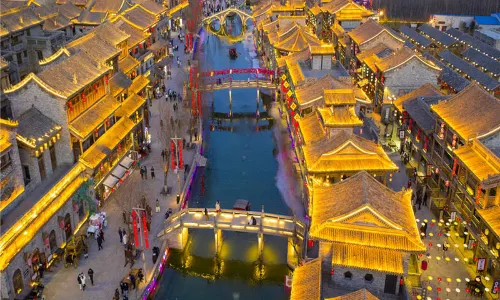
It's quite comfortable to walk around the ancient town of Longquan in Hebei! There are antique buildings inside, and it feels quite interesting to walk on the stone road. There are many small shops on the roadside, selling special snacks and gadgets, and you won't feel bored just walking around. The staff are very friendly and patiently answer questions when asking for directions or consulting. The scenic area is very clean and the road surface is flat, which is convenient for both elderly and children. When the lights are on in the evening, the ancient town looks more atmospheric and beautiful for taking pictures. The overall pace of the tour is not tense, and you can slowly feel the feeling of the old town. It is quite suitable for relaxing on weekends or holidays~
 94.7/5
 YYMary
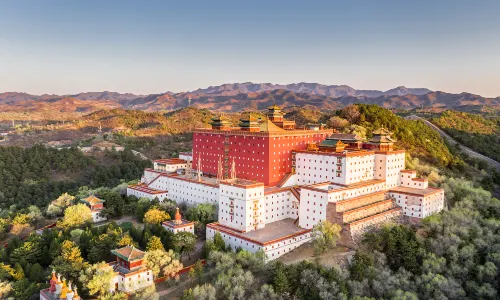
The Potala Palace in Chengde, often called the "Little Potala Palace" because it was modeled after the Potala Palace in Lhasa, is a traditional Tibetan temple. After buying a ticket and entering, you first see a square and a large pavilion. Inside the pavilion are three large stone tablets inscribed with text, reportedly written in four languages, recording the reasons for the temple's construction and a historical account of the Torgut tribe's return. I read the introduction and learned that it was built by Emperor Qianlong to celebrate his 60th birthday and his mother's 80th birthday, and also to welcome the returning Torgut tribe. It held significant political importance, but I don't know the historical details well; I just imagine the emperor must have made a grand spectacle of it. After passing the pavilion, the climb begins. The temple is built on a hillside, so the visit involves continuous ascent. Along the path are some white Tibetan-style buildings called "white platforms," which are monks' quarters or small halls. The walls are thick, and the windows are black, making them quite different from typical Han Chinese temples. The climb was a bit tiring, but the scenery along the way was beautiful. After climbing for a while, I saw the main building—the Red Terrace. It was very tall, with its entire wall red and neatly arranged Tibetan-style windows. Standing below and looking up, it felt very imposing. Following a sloping path along the side of the Red Terrace, I reached the top. Above the Red Terrace was a platform, with the main hall, the "Hall of Universal Unity," in the center. Its roof was covered with gilded copper tiles, shimmering in the sunlight. There were also some other pavilions around it. Here, the combination of two architectural styles was clearly visible: the lower part was Tibetan-style red walls and black windows, while the upper part was Han-style glazed tile roofs. I walked around the platform, and from the high vantage point, I could see the scenery of Chengde city and the shadows of distant mountains. Shoe covers were required to enter the main hall. The interior was rather dim, containing Buddha statues and exquisite murals, but the poor lighting made it difficult to see the details clearly. Many tourists were taking photos, and some believers were kneeling in worship. I stayed for a while and then left. After the tour, my impression was that the temple is indeed magnificent, evoking images of the grandeur of the Potala Palace in Lhasa in its heyday. It's not merely a place of worship; it's more like a symbol, showcasing the relationship between the Qing Dynasty central government and Tibet, Mongolia, and other regions. As a tourist, I could feel the solemnity and historical atmosphere, but frankly, I only have a general understanding of the complex historical background. Overall, it was a worthwhile visit. I saw a different architectural style and learned a bit about its history. Climbing the mountain, enjoying the scenery, and taking some photos made the trip worthwhile. Those interested in Qing Dynasty history or Tibetan Buddhist architecture would likely find this place even more interesting.
 104.6/5
 M51***36
Aside from the crowds, there are no other problems. It has a classic and antique feel, and the shops inside are very bustling, with everything you need for eating, drinking, and entertainment. Some local specialties are worth buying. The overall planning of the scenic area is also good, with both a sense of traditional history and a modern atmosphere. It's worth a visit.
 Featured in 2026 Global 50 - Cool Water Escapes

 The Aranya Fairy Tale Month makes its warm return | Nov 2025-Dec 2025