





 4.5/5
4.5/5 Nicole
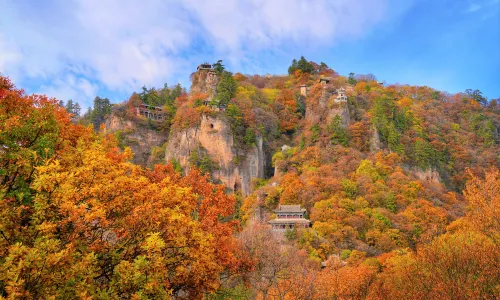
First, park your car at the entrance to the attraction. There's a spacious parking lot, which is very convenient. Then, take the shuttle bus up the mountain. After circling for about 30 minutes, you'll reach the summit. There's a small museum with stunning views. Then, you'll start a fascinating walk, weaving and weaving, sometimes up slopes, sometimes into caves. It's quite interesting. After an hour or two of this, you'll reach another parking spot, take the shuttle bus back to the attraction ticket office, and then pick up your car and go home. The entire journey takes at least six hours. I personally think it's worth it. The entrance fee is a bit expensive.
 4.5/5
4.5/5 独行舟
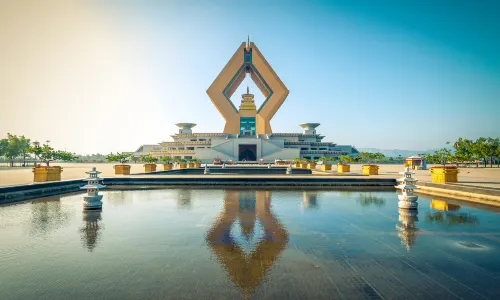
独行舟Famen Temple was built in the Hengling Year of the end of the Eastern Han Dynasty (147 ~ 180). The three years of the emperor (583) changed the name of "Chengshi Daochang", and the first year of Tang Wude (618) Gaozu Li Yuanxuan name "Famen Temple", which has been used to this day. Famen Temple is built because of the Sheli and the temple is built because of the tower. Since Tang Xianqing four years (659) Tang Gaozong first welcomed the Buddha refers to Sheli to Tang Xiantong 15 years (874) Tang Yuzong sent back the Buddha refers to Sheli, the Tang Dynasty has Gao Zong, Wuhou, Zhongzong, Suzong, Dezong, Xianzong, and Yuanzong eight emperors six Ying and two sent to support Famen Temple Buddha refers to Sheli. Famen Temple built the tower because of the support of the Buddha refers to the Sheli, because the tower became the temple, from 1800 years ago "Holy Temple" to the Sui and Tang Dynasty to the construction of the wooden tower to Ming Longqing three years (1569) to the collapse of the wooden tower, Ming Wanli 37 years (1609) to the eight-point thirteen-level brick tower. In 1981, the pagoda half wall collapsed, in 1987 the Famen Temple real pagoda was rebuilt, four Buddhas pointed to the Sheli and 2,499 pieces of Datang national treasure re-created the world, in 1988, the original real pagoda was completed, Famen Temple opened to the outside world. Heshi Sheli Tower, the tower is 148 meters high, and the shape is two hands. In May 2009, Heshi Sheli Tower, 1,230 meters of Buddha Guang Avenue, and 2 100,000 pilgrimage squares were all completed and opened. Heshi Sheli Tower is divided into ground and ground palace parts, and the ground part is built with Buddhist three Buddhas, Bodhisattvas from all sides, and the four kings of heaven and other Buddhist cultural landscapes. The Buddha's true finger bones are stored in the middle hall of the Sheli Tower. Famen Temple Museum, based on the Famen Temple site, based on the archaeological finds of the Tang Dynasty Buddha Tower and the museum with the characteristics of the Datang Palace treasures and Buddhist art. At present, the museum has 9,439 cultural relics, of which 138 cultural relics are first-class, the exhibition hall is divided into historical and cultural hall, treasure pavilion and gold and silverware grand view, the exhibition cultural relics include Shelibao letter, gold and silverware, Buddhist instrument, secret color porcelain, glassware, silk and other rare treasures.
 4.6/5
4.6/5 无为空空
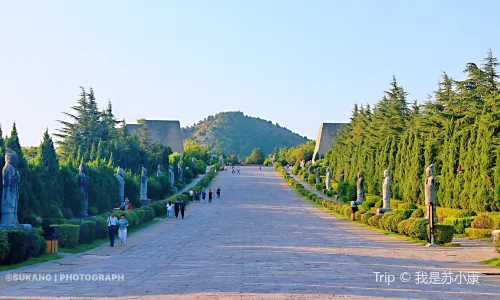
无为空空Qianling is the joint burial tomb of Tang Gaozong Lizhi and the only queen Wu Zetian in Chinese history. It is located in Ganxian County, Xianyang City, Shaanxi Province. It is the only unstolen tomb of the Tang Dynasty in China. It is also a national tourist attraction and a key cultural relics protection unit in the country. Because it is located in Ganxian County, and Liangshan symbolizes "Gan" (representing heaven) in Zhouyi Bagua, which fits the supreme status of the emperor's tomb, so it is called "Qianling". As the only two-dying emperors (Tang Gaozong and Wu Zetian) in Chinese history, it has set a precedent for the joint burial of the emperor's tomb. It is also rare in the world's mausoleum. 128 large-scale stone inscriptions in the cemetery, including no-word monument, Shushengji monument, 61 statues of Chenchen, etc., are known as the "Shengtang Stone Carving Art Open-air Museum". No-word monument is7.53 meters high, and eight dragons are carved, symbolizing the controversy over Wu Zetian's work.
 4.6/5
4.6/5 行摄ing
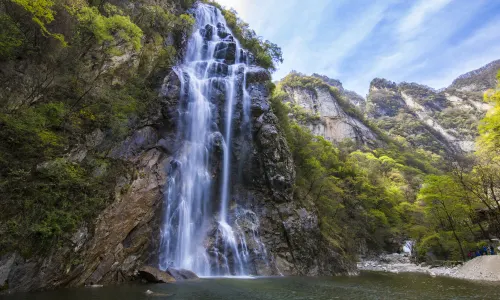
行摄ingIt is indeed a scenic spot with magnificent and unique natural scenery. The disadvantage is that the tour route is not very clear. Follow the sightseeing station and get off, and finally find that some attractions have not gone, leaving a pity. In addition, the cost of sightseeing cars and ropeways is too expensive. If the weather is bad, it will feel worthless.
 4.5/5
4.5/5 飞扬的燕燕
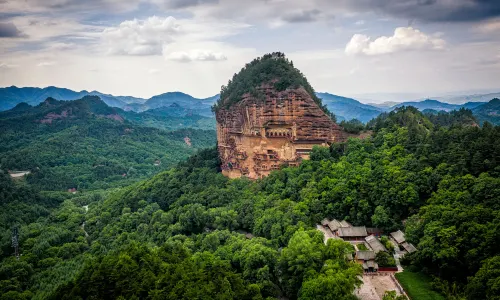
飞扬的燕燕The first batch of key national cultural relics protection units [Maijishan Grottoes], with Dunhuang, Longmen, Yungang and known as China's four major grottoes. Maijishan Grottoes were built in the post-Qin period of the 16th Kingdom. After more than ten dynasty, including Northern Wei, Western Wei, Beizhou, Yi, Tang, Wu Dynasty, Song, Yuan, Ming and Qing, etc., more than 1600 years of excavation and repair, there are 221 existing caves, 3,938 portraits of 10,632 bodies, murals 979.54 square meters. The statues preserved in Maijishan Grottoes are mainly mud-plastic, retaining a large number of religious, artistic, architectural and other physical materials, reflecting the characteristics of statues in various eras over thousands of years, reflecting the development and evolution of clay-plastic art in China, and the reputation of the "Oriental Sculpture Exhibition Hall".
 4.9/5
4.9/5 Min “miNNieTHeMoUSe” Lim
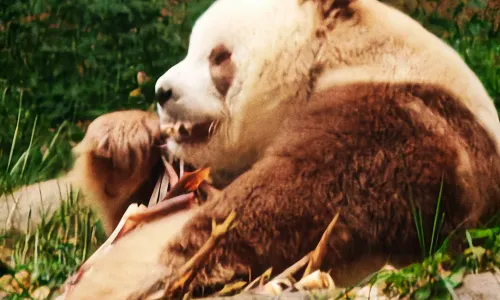
We enjoyed seeing the animals especially all the pandas, including Qizai at the park. We would recommend to take the tram ride to the top and view all the animals coming down towards the exit. That will be most leisurely a visit and allow you to have more time to hang at each enclosure.
 4.8/5
4.8/5 linglizi
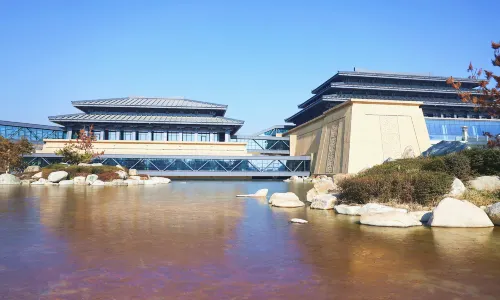
When I went to Xi'an, I made an appointment for the Shaanxi History Museum. I didn't make an appointment, so I had to make an appointment for the Qin and Han Museum. Located in Qin and Han New Town, Xixian New District, it is a special museum that focuses on displaying cultural relics and history and culture during the Qin and Han periods. The exhibition hall is displayed with the concept of "big history + small theme", with "the same Qin and Han civilization theme exhibition in the world" and special exhibitions such as Qin and Han architecture, music, life, and more than 1,000 precious cultural relics and digital technology, vividly presenting the brilliant achievements of Qin and Han unified China. Its architecture integrates the style of Qin Xianyang Palace, and the magnificent atmosphere is intersected with the surrounding ruins, which has become an important window for interpreting Chinese civilization. I didn't expect that there are many collections and the experience is great. It is a little farther from the city. You can reach it by subway line 2 to line 14.
 4.6/5
4.6/5 NatDiscoversAsia
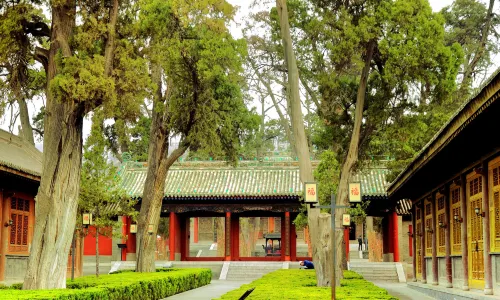
Fuxi Temple is a beautiful and serene place to learn about Chinese mythology and history. Dedicated to Fuxi, the legendary ancestor of humanity, the temple complex has traditional Ming–Qing architecture, ancient cypress trees, and informative displays. It’s peaceful, less crowded than many tourist spots, and gives a real sense of Tianshui’s cultural heritage. A must-visit if you’re interested in history and Chinese legends.
 4.5/5
4.5/5 酱螽
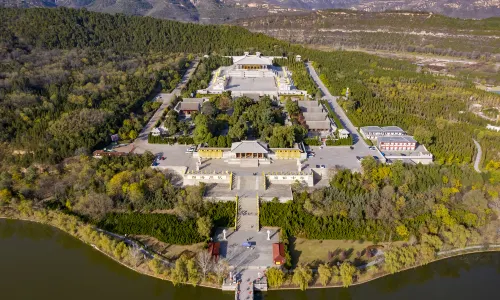
酱螽Tour routes You can visit the temple first and then go to the tomb area of the Yellow Emperor. The temple has attractions such as the Yellow Emperor's hand planting cypress, the temple of the first ancestors of the humanities, and the Yellow Emperor's footprint stone. The Yellow Emperor's tomb area includes Hanwu Sendai, Longxi Pavilion, etc. Longxi Pavilion is the best place to take a panoramic view of the tomb.
 4.6/5
4.6/5 Chiapaneco
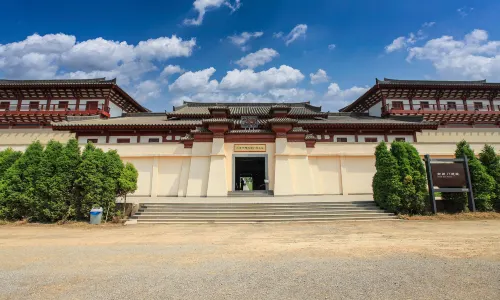
Such a great site! Almost no one there. Note that this ticket is a QR code, not tied to your passport. Don't stop at the entrance booth, just go straight to the underground museum section and they'll scan the QR code.

