





 4.6/5
4.6/5 Geoffrey_CZ
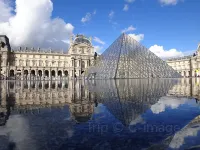
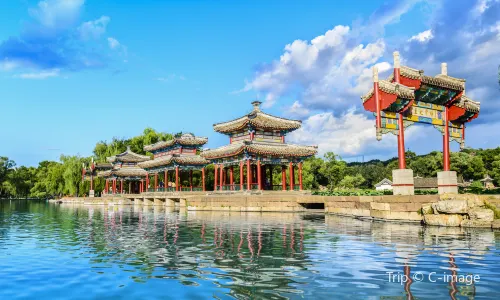
I was a little disappointed by the mountain resort area itself. It is nice, but definitely not worth the entrance price. (First 2 pics) The summer palace in Beijing is really nicer. However, the Putuo temple, Xumi temple and the Puning were definitely worth the trip. I loved them all. (7 other pics).
 4.7/5
4.7/5 YYMary
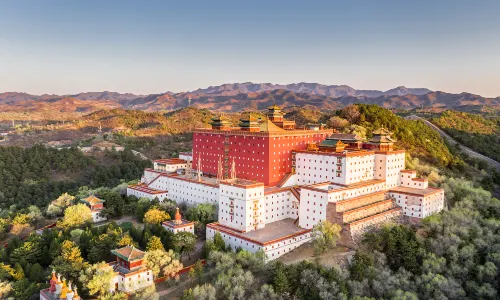
The Potala Palace in Chengde, often called the "Little Potala Palace" because it was modeled after the Potala Palace in Lhasa, is a traditional Tibetan temple. After buying a ticket and entering, you first see a square and a large pavilion. Inside the pavilion are three large stone tablets inscribed with text, reportedly written in four languages, recording the reasons for the temple's construction and a historical account of the Torgut tribe's return. I read the introduction and learned that it was built by Emperor Qianlong to celebrate his 60th birthday and his mother's 80th birthday, and also to welcome the returning Torgut tribe. It held significant political importance, but I don't know the historical details well; I just imagine the emperor must have made a grand spectacle of it. After passing the pavilion, the climb begins. The temple is built on a hillside, so the visit involves continuous ascent. Along the path are some white Tibetan-style buildings called "white platforms," which are monks' quarters or small halls. The walls are thick, and the windows are black, making them quite different from typical Han Chinese temples. The climb was a bit tiring, but the scenery along the way was beautiful. After climbing for a while, I saw the main building—the Red Terrace. It was very tall, with its entire wall red and neatly arranged Tibetan-style windows. Standing below and looking up, it felt very imposing. Following a sloping path along the side of the Red Terrace, I reached the top. Above the Red Terrace was a platform, with the main hall, the "Hall of Universal Unity," in the center. Its roof was covered with gilded copper tiles, shimmering in the sunlight. There were also some other pavilions around it. Here, the combination of two architectural styles was clearly visible: the lower part was Tibetan-style red walls and black windows, while the upper part was Han-style glazed tile roofs. I walked around the platform, and from the high vantage point, I could see the scenery of Chengde city and the shadows of distant mountains. Shoe covers were required to enter the main hall. The interior was rather dim, containing Buddha statues and exquisite murals, but the poor lighting made it difficult to see the details clearly. Many tourists were taking photos, and some believers were kneeling in worship. I stayed for a while and then left. After the tour, my impression was that the temple is indeed magnificent, evoking images of the grandeur of the Potala Palace in Lhasa in its heyday. It's not merely a place of worship; it's more like a symbol, showcasing the relationship between the Qing Dynasty central government and Tibet, Mongolia, and other regions. As a tourist, I could feel the solemnity and historical atmosphere, but frankly, I only have a general understanding of the complex historical background. Overall, it was a worthwhile visit. I saw a different architectural style and learned a bit about its history. Climbing the mountain, enjoying the scenery, and taking some photos made the trip worthwhile. Those interested in Qing Dynasty history or Tibetan Buddhist architecture would likely find this place even more interesting.
 4.8/5
4.8/5 我爱安安公主
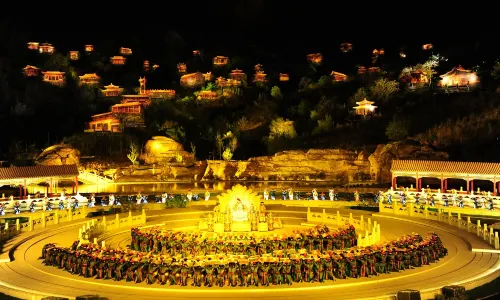
It's a performance worth watching. The latest stage technology is used and the scale is large. However, it is located in the mountains and it is an open-air performance. It will be a bit cold if you go to see it during the National Day holiday, so it is recommended to wear more clothes.
 44.7/5
 RoamingRedhead
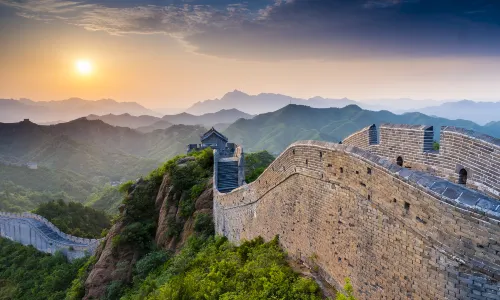
This is a must buy if you plan on traveling to the Great Wall. It is an extremely affordable ticket that not only brings you to a lesser known area of the Great Wall but additionally provides you with a cable car ticket and a ride home. The service was great and very timely. The time given at the Great Wall was more than enough to explore everything we wanted to. This specific part of the great wall was also stellar and had many more rustic areas that were very cool to see. I absolutely recommend this for those that wish to journey to a more untouched portion of the Great Wall.
 54.8/5
 SUNSHINE ONUS
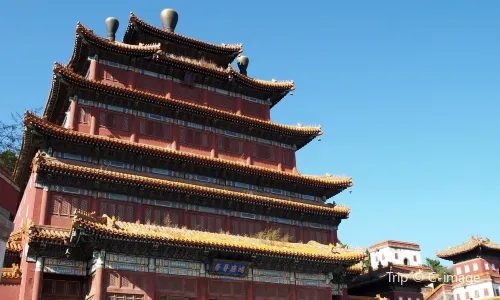
Puning Temple is one of the eight temples outside Chengde, a national-level attraction and a key national protection cultural relics. Puning Temple was built during the Qianlong Qing Dynasty, and was built by Qianlong Emperor to commemorate the Pingding Erut Mongol rebellion modeled on the Tibetan Sanye Temple. The construction of Puning Temple is magnificent and magnificent. The former Han style and the later Tibetan style temple buildings are dedicated to the world's largest golden lacquer Buddha in the Daxiong Palace. Chengde Puning Temple is a typical representative of the Qing emperor's measures to manage the state with religious beliefs.
 64.6/5
 Anonymous user
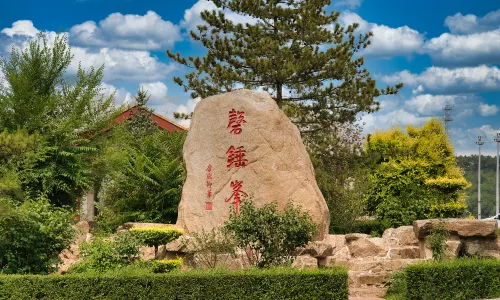
It was a bit frustrating that the cable car wasn't running, but I still managed to climb up! From there, you can see the whole city and the Summer Palace, and the white mulberry trees in the middle of the Hammer Peak are truly breathtaking, showcasing the wonders of nature!
 74.6/5
 M66***28
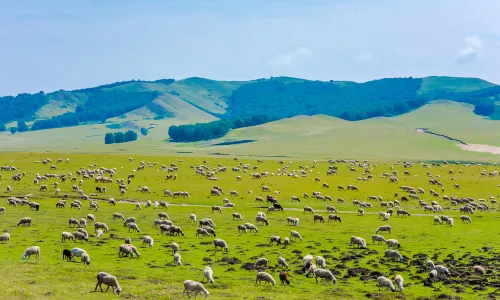
Autumn in Yudaokou is like nature overturning its palette. Golden leaves, fiery red maple leaves, and emerald green pines and cypresses interweave into a brilliant and colorful painting.
 84.7/5SUNSHINE ONUS
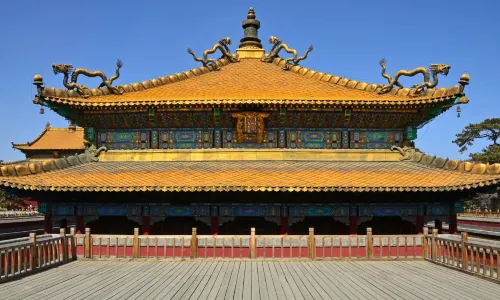
It is worth a visit to the temple of Sumi Fushou. This integrated former Han and later Tibetan temple is built on a grand scale and designed to take into account both the needs of Han and the needs of Mongolian nobles. Although modeled on the construction of the Tashilunbu Temple in Shigatse, Tibet, the scale is large and conforms to the solemn and majestic characteristics of the royal temple. Follow the temple guide signs, carefully appreciate the buildings, learn Buddhist knowledge and development and change processes, especially the process of understanding the rule of the Qing Dynasty and the unity of the various ethnic groups.
 Featured in 2026 Global 50 - Cool Water Escapes
