






 4.6/5
4.6/5 追风遇海
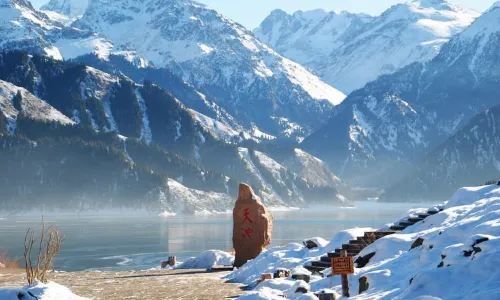
追风遇海Tianshan Tianchi is a typical glacier end-to-end lake, the lake is narrow and long Baohu-like, about3.5 kilometers from north to south, about1.5 kilometers from the widest part of the east and west, the lake is clear and clear, showing a different depth of blue under the sun, surrounded by snowy mountains, and the Bergda peak is reflected. Form a wonderful landscape of "three scenes a day". Bogda Peak is 5445 meters above sea level and snows all year round. The scenic area is rich in biodiversity and the forest coverage rate exceeds 70%, with Xueling spruce. The West Wangmuzu Temple is located on the east bank of Tianchi, facing north and south, surrounded by mountains on three sides, and the temple is dedicated to the statue of the West Wangmu.
 4.7/5
4.7/5 發喵小耳朵
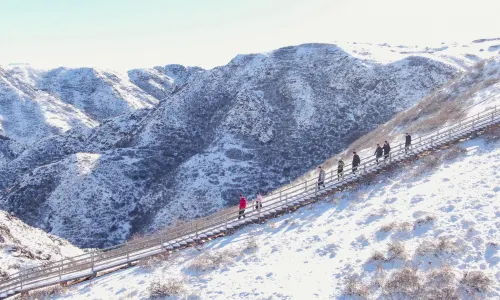
發喵小耳朵The landscape of Jiangbulak is like God knocking over the palette. There are golden wheat, green wheat, goose yellow rapeseed flowers. There are small purple flowers. Of course, due to the different colors of the plants, there are light green gray green. Tianshan strange slope, uphill does not need to slip up, downhill has to work hard to walk, haha, you say wonderful. The beautiful scenery makes people linger. The beautiful women wear beautiful skirts to leave shadows in the wheat waves and the sea of flowers. Paradise, helicopters overlooking the scenic spot is like seeing a colorful blanket. It's really lingering and unwilling to leave!
 4.8/5迪肯孔裴矩
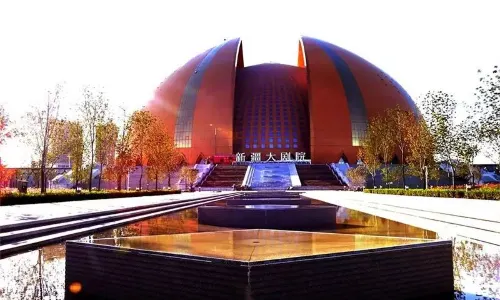
Xinjiang Grand Theater is located in the suburbs of Urumqi. It covers a large area and has a spacious parking lot. There is a buffet on the first floor of the theater. The tour group arranged dinner here that day and went directly to watch the Thousand Returns to the Western Regions performance after dinner. There are entrances to the performance hall on the second and third floors of the theater, which are divided into odd and even numbers. The theater is large and imposing.
 44.4/5
 难 得糊 涂
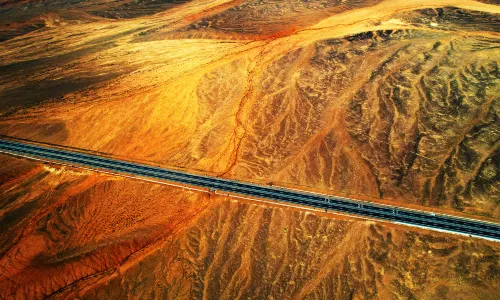
The Gurbantunggut Desert, located in the central Junggar Basin of Xinjiang, is China's second-largest desert (approximately 48,800–51,000 km²) and the largest fixed or semi-fixed desert in China (97% of the dunes are stabilized by vegetation or biocrusts). It lies at an altitude of 300–600 meters, receives a stable snow cover of 10–30 cm in winter, and receives 70–150 mm of annual precipitation. The western mountain passes bring in moisture, nurturing over 300 species of psammophytes, creating a rare "desert oasis." Landscape: 1. Fixed Dune Community: Haloxylon ammodendron, Ephedra sinica, Tamarix tamarisk, and Calligonum mongolicum cover 40–50%. In spring, ephemeral plants bloom in April–May, while in autumn, poplars and Haloxylon ammodendron turn golden yellow in September–October, making it a prime photography season. 2. Honeycomb/Girder-Shaped Dunes: Symmetrical circular and gridded sand ridges appear extensively in the central and southern regions, resembling "earth honeycombs" and offering excellent aerial and aerial photography opportunities. 3. Wildlife: Goitered gazelles, hares, foxes, wolves, wild camels, and migratory birds. 4. Cultural relics along the Silk Road, such as the Beiting Protectorate ruins, Tudunzi Mosque, beacon towers, and Maqiao Ancient City, are scattered along the desert edge. Light hikes with cultural tours are available. Entry must be made within approved areas by national and local governments, and all regulations must be followed. Extreme safety precautions must be observed, including when driving along highways.
 Free Lifetime Admission to Tianshan Tianchi Scenic Area for Married Couples

 Featured in 2026 China 50 - Spring Outings