





 4.6/5
4.6/5 Magnus Tan
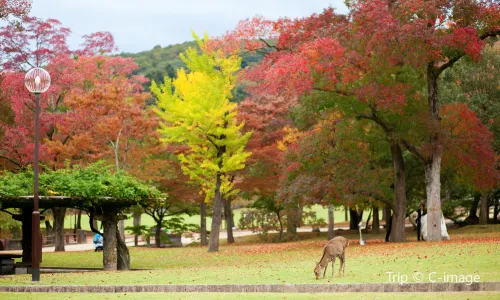
Apart from of course the feline friends that roam around the park, it’s overall an extremely beautiful place to spend a cool winters morning, even when there is hardly any vegetation and the grass is dry and brown. My favourite activity was eating at this little udon restaurant perched at the edge of Sarusawa-Ike Pond, with a Starbucks on the other side. The famous mochi shop with the pounding chefs is just down the road leading away from the Starbucks. I want to walk up Wakakusayama Hill in Nara Park and see the whole city from the top, in the future.
 4.6/5
4.6/5 到处玩玩
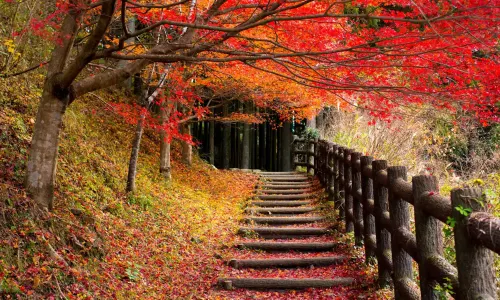
到处玩玩The journey is a truly remarkable one, with world cultural heritage sites intertwined throughout. Many years from now, I might still recall these mountain streams, waterfalls, and creeks, the rain, dew, and gentle breezes, and my reverence for the gods!
 4.4/5
4.4/5 VOVO逍遥行
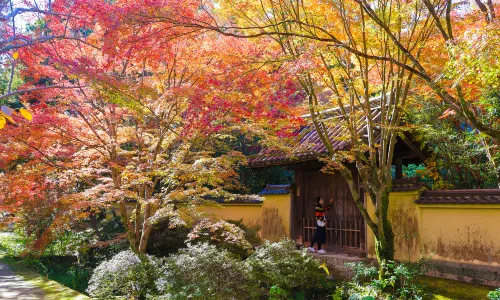
It was built by the Tang Dynasty monk Jianzhen in 759 AD and completed in 770 AD. It is the main temple of the Vinaya School of Japanese Buddhism. It is listed as one of the two major temples for the dissemination and research of Vinaya along with the Kaidan-in of Todaiji Temple. The banner on the gate of the temple, "Tōshōdaiji", was written by the Japanese Empress Koken in the style of Wang Xizhi and Wang Xianzhi. There are lecture halls and ordination platforms from the Tenpyō era, golden halls from the Nara era, and drum towers from the Kamakura era in the temple. The golden hall, sutra collection, drum tower, and statue of Jianzhen are known as national treasures. Jianzhen also brought the high level of civilization of the Tang Dynasty in China, and promoted the improvement of the level of Buddhism, medicine, architecture, and sculpture in Japan. In 1980 and 2010, the statue of Jianzhen returned to Yangzhou twice to "visit relatives". In 1998, Toshōdaiji was listed as a World Cultural Heritage as an important part of the "Cultural Heritage of the Ancient Capital of Nara".
 Achieved a 2-year streak on the annual lists
