





 4.6/5
4.6/5 Magnus Tan
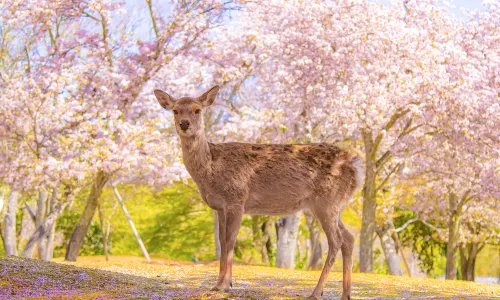
Apart from of course the feline friends that roam around the park, it’s overall an extremely beautiful place to spend a cool winters morning, even when there is hardly any vegetation and the grass is dry and brown. My favourite activity was eating at this little udon restaurant perched at the edge of Sarusawa-Ike Pond, with a Starbucks on the other side. The famous mochi shop with the pounding chefs is just down the road leading away from the Starbucks. I want to walk up Wakakusayama Hill in Nara Park and see the whole city from the top, in the future.

 4.6/5
4.6/5 晓舟工作室
晓舟工作室Going to Nara, if you don't go to Dongdaeji, it's a pity. Because you will miss the hall of the world's largest wooden structure, you will also miss the great opportunity to feel the charm of Tang Feng, and it is even more difficult to experience the joy of Liang Sicheng and other Chinese architectural masters who found Wutaishan Foguang Temple!
 4.6/5
4.6/5 michelle_469
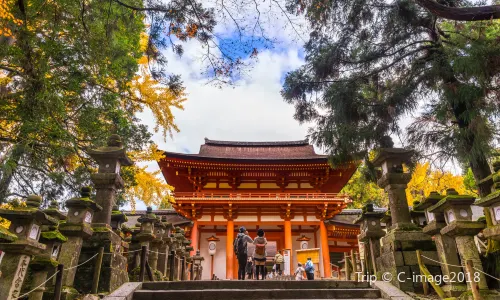
It was quite a long walk from Nara station to reach the temple, but there are so many sightseeing spots in between, so you don't really feel the long walk. The temple gives off very tranquil feeling.
 44.5/5
 _TI***j0
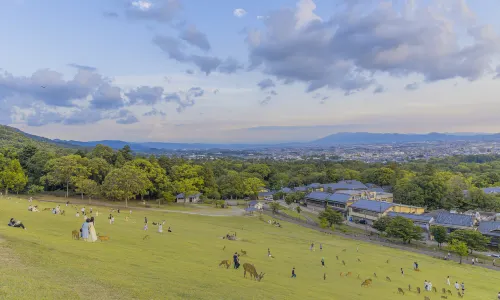
happy is so simple, you can just enjoy the visit in the place with your friends and family, sit down and enjoy the relaxing
 54.6/5
 到处玩玩
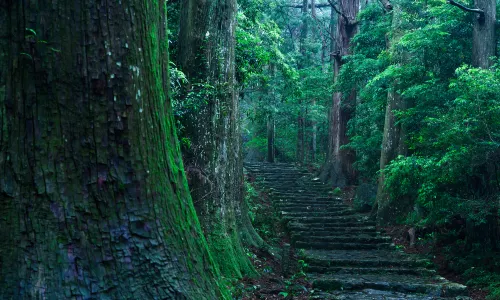
到处玩玩The journey is a truly remarkable one, with world cultural heritage sites intertwined throughout. Many years from now, I might still recall these mountain streams, waterfalls, and creeks, the rain, dew, and gentle breezes, and my reverence for the gods!
 64.7/5
 KenjiC
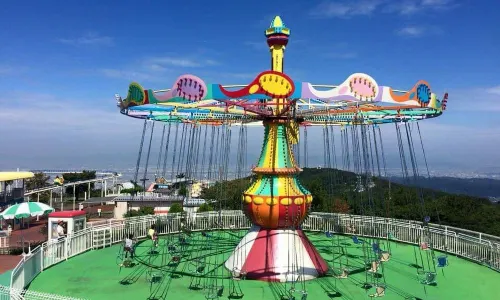
Ikomayama Amusement Park is located at the top of Mount Ikoma, overlooking the Nara Basin and Osaka Plains. There are various riding equipment and game facilities here, so there is no doubt that children will be very happy.
 74.4/5
 VOVO逍遥行
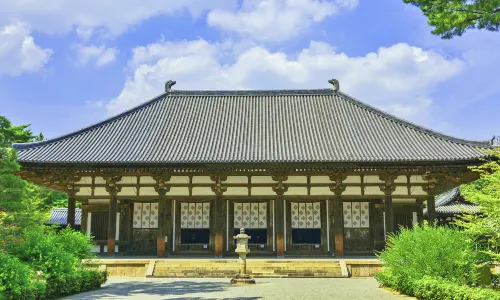
It was built by the Tang Dynasty monk Jianzhen in 759 AD and completed in 770 AD. It is the main temple of the Vinaya School of Japanese Buddhism. It is listed as one of the two major temples for the dissemination and research of Vinaya along with the Kaidan-in of Todaiji Temple. The banner on the gate of the temple, "Tōshōdaiji", was written by the Japanese Empress Koken in the style of Wang Xizhi and Wang Xianzhi. There are lecture halls and ordination platforms from the Tenpyō era, golden halls from the Nara era, and drum towers from the Kamakura era in the temple. The golden hall, sutra collection, drum tower, and statue of Jianzhen are known as national treasures. Jianzhen also brought the high level of civilization of the Tang Dynasty in China, and promoted the improvement of the level of Buddhism, medicine, architecture, and sculpture in Japan. In 1980 and 2010, the statue of Jianzhen returned to Yangzhou twice to "visit relatives". In 1998, Toshōdaiji was listed as a World Cultural Heritage as an important part of the "Cultural Heritage of the Ancient Capital of Nara".
 84.3/5
 贝小贝193
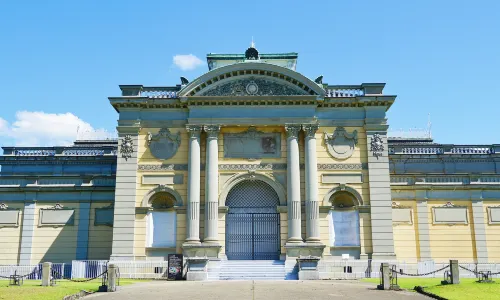
Admission is 90 RMB. Located just across from Nara Park, the exhibition showcases approximately 220 objects, showcasing 6,000 years of human civilization, centered around the archaeological and folklore collections of the Tenri Reference Museum affiliated with Tenri University and complemented by Buddhist art from the Nara National Museum. The exhibition is divided into three sections: A World of Intersecting Civilizations: Focusing on the exchange of civilizations across the Eurasian continent, exhibits include a Sumerian king statue (circa 2100 BC), a Chinese Shang Dynasty black pottery goblet, and a standing Buddha statue from the Kamakura period in Japan. A World of Gods and Mystery: Exhibits religious objects such as New Guinean ritual masks, Balinese ritual drama masks, and Peruvian mummy shrouds. Memories of the 20th Century: Presents artifacts reflecting 20th-century social change, including Canadian soldiers' honor crowns, Egyptian water jugs, and the wordless "hoko" signboards of Beijing, China. Special Exhibits: An Iraqi turquoise-inlaid bronze spear (2100 BC): Excavated in Iraq, it showcases the ancient civilization of the Mesopotamian region. Balinese gold human-faced headdress (first half of the 20th century): reflects local religious ritual culture. Canadian warrior's honor crown (mid-20th century): showcases the cultural heritage of Indigenous peoples. Exhibition Highlights This first special exhibition dedicated to ethnic culture reveals the value of tangible cultural heritage in the evolution of civilization through an interdisciplinary perspective, highlighting the fragility of traditional crafts in the context of globalization.
 94.5/5
 风起鹰鲨
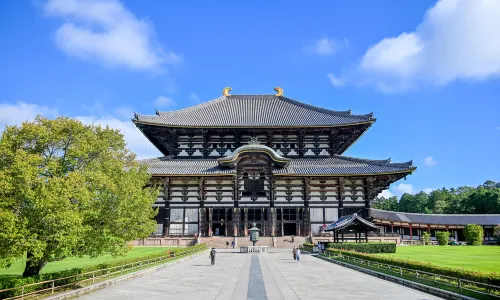
风起鹰鲨Free attractions, next to Nara Park, you can come and walk around during the day and night. There are not many people at night, and there are many deer on both sides. There is a small stall selling deer biscuits next to it, 200 yen a piece, and there are a lot of them. Be careful when feeding the deer, there will be many deer around. When you walk in, you will reach Todaiji Temple, and you need to buy a ticket to enter.
 104.4/5
 一直在路上的猫
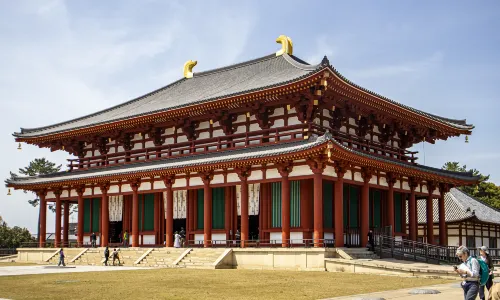
• Origin and migration: In the eighth year of Emperor Tenji (669), Fujiwara no Kamatari no Namuro Kagami established Yamashina Temple in Taoyuan, Yamashina Village, Yamashiro. In the first year of Emperor Tenmu (672), it was moved to Umayano, Yamatotakaichi County, and renamed Umayano Temple. In the third year of Wasedo (710), when the capital was moved to Heijo-kyo, Fujiwara no Fuhito moved the temple site to the present site and changed its name to Kofuku-ji Temple. • Development and rise and fall: It prospered with the prosperity of the Fujiwara clan and became one of the seven major temples in Nanto. In the Heian period, it also managed Kasuga Shrine, and its power was even greater. After the Kamakura and Muromachi periods, due to frequent wars and the recovery of the estate, the temple gradually declined. During the Meiji Restoration, it was affiliated with the Shingon sect. In the fifteenth year of the Meiji Restoration (1882), it became independent and once again became the head temple of the Hosso sect. • Chukin-do: Built by Fujiwara no Fuhito, it is the central building of Kofuku-ji Temple. When it was first built, it was the largest temple in the Nara period. It was burned down many times and rebuilt in October 2018. It has the characteristics of the Tenpyo style. • Five-story pagoda: First built by Empress Komyo in 730, the current pagoda was rebuilt in 1426. The pagoda is 50.1 meters high and is the second tallest pagoda in Japan. It is an important protected cultural relic in Japan. • Three-story pagoda: Built by Empress Sutoku in 1143, the current pagoda was built in the early Kamakura period. 1,000 statues of Yakushi Nyorai, Shakyamuni Nyorai, Amida Nyorai, and Maitreya Nyorai are depicted on the internal wall panels of the first floor. • Hokuen-do: Built to commemorate Fujiwara no Fuhito, it is an octagonal building similar to the Yumedono of Horyu-ji Temple. It was first built in 721 and the current building was built in 1210. • Cultural Relics Collection: The temple has rich treasures, with more than 100 valuable cultural relics of national treasure and important cultural property level. The National Treasure Museum houses the famous Asura statue, the six-foot-tall Sakyamuni head statue, Buddha statues, paintings, crafts, historical materials, etc. • Religious Status: Xingfu Temple is the main temple of the Dharma-Appearance Sect, one of the six sects in Nandu, and is also one of the seven major temples in Nandu. It is the central dojo of Dharma-Appearance and Abhidharma-Sasana teachings, and has produced many talents.
 Enjoy the Autumn Scenery of Nara | Nov 2025-Dec 2025
 Achieved a 2-year streak on the annual lists
