





 4.3/5
4.3/5 MimiLu
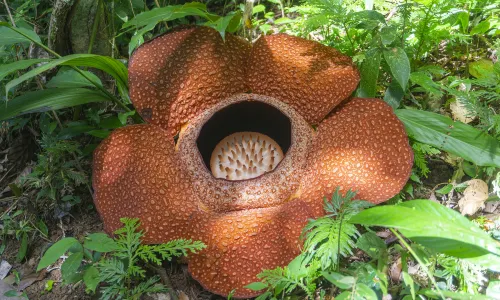
Rafflesia arnoldii (scientific name: Rafflesia arnoldii) is the largest flower in the world, native to the Malay Peninsula, Borneo and Sumatra. It has no roots, stems, leaves and other parts of ordinary plants, only a few petals, with a diameter of more than 1 meter and a weight of about 11 kilograms. Rafflesia arnoldii is a parasitic plant that survives by absorbing nutrients from plants of the genus Rafflesia in the grape family. When it blooms, it releases a rotten smell, attracting flies and other scavenging insects to spread pollen for it. It takes 9 months from the growth of flower buds to flowering, and the flowering period is about 3 days to 1 week. Rafflesia arnoldii cannot photosynthesize, but survives by parasitizing on tropical vines such as Rafflesia in the grape family to absorb nutrients. Rafflesia arnoldii has no roots, stems, leaves and other parts of ordinary plants, only a few petals; it takes 9 months from the growth of flower buds to flowering, and the flowering period is about 3 days to 1 week. When the Rafflesia flower first blooms, it emits a faint fragrance, which then turns into a foul smell like rotten meat, and uses this smell to attract flies and other carrion-eating insects to spread pollen for itself. After successful pollination, the flower will grow fruits after 6-12 months, and the fruits contain thousands of small seeds that are spread by squirrels or tree shrews. In order to see the beauty of the Rafflesia flower, go to the Sabah Rafflesia Conservation Area and take a look under the guidance of forest managers. Walking in the tropical rainforest, sometimes it rains and sometimes it is sunny. We still went all the way on the wet muddy road. Even if we were soaked, we still had to see it with our own eyes to make the trip worthwhile! This time we were very lucky to see the seeds/buds/of course the Rafflesia flower that had only bloomed for 3 days. Generally speaking, the life of the Rafflesia flower is only seven days after blooming, so you really need a little luck to see the true face of the beauty! The forest manager told me that I could touch it to see what it felt like. After going through so much hardship, I saw it in front of me. I felt so moved and excited. All the efforts were worth it! It felt hard and like a fossil when I touched it, but I have to say that when you come here, you must go to see the Rafflesia to make your journey wonderful and leave a beautiful memory!