




 4.6/5
4.6/5 Anonymous user
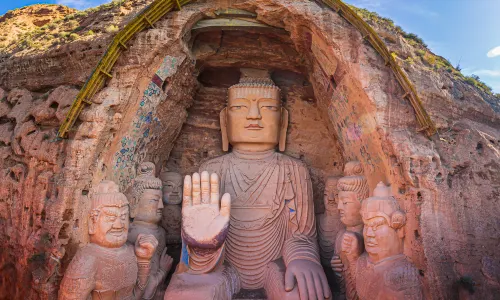
Currently, only Cave 13 of the Tiantishan Grottoes is open to the public; the painted sculptures and murals in the other sections have been moved to museums. However, Cave 13 is definitely worth a visit—it's truly breathtaking. The reservoir itself is also beautiful, with its shimmering waters.
 4.5/5
4.5/5 M29***51
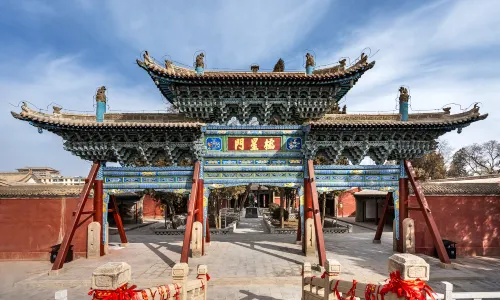
Wuwei Confucian Temple is located at No. 172 Chongwen Street, Liangzhou District, Wuwei City, Gansu Province. It was built in the second year of Ming Orthodox (1437), and was built four years later. It is hosted by Xu Yi, the right-hand man of the Ministry of War. It covers an area of 30096 square meters. The Confucian Temple is composed of three parts, the Wenchang Palace in the east, the Confucian Temple in the middle and the Confucian College in the west. The whole building layout is symmetrical, the structure is rigorous, is a group of majestic palace-style buildings, dubbed "the crown of the right palace", is the largest and most complete Confucian temple in the northwest area, one of the three major Confucian temples in the country. Wuwei Temple is a holy place to sacrifice Confucius, and an important place to inherit and promote Confucian culture. Every major festival, the temple will hold a grand ritual of sacrifice, dressed in Hanfu students dressed in clothes, reciting classics, to the most holy master Confucius, the ancient ceremony in the modern society has given a new vitality, let people deeply appreciate the traditional cultural connotation of respecting the teacher.
 4.5/5M29***51
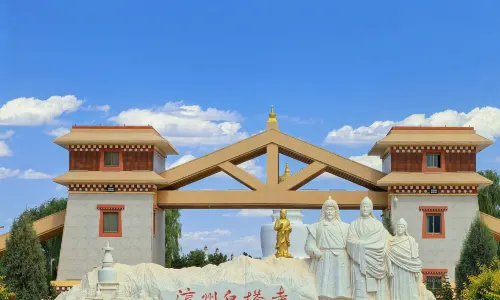
Liangzhou Baita Temple has important historical value, mainly reflected in the following aspects: Witness of Tibet's belonging: In 1247, the Mongolian emperor Kuo Duan and Tibetan religious leader Sajia Banzhida held Liangzhou talks at the Baita Temple to reach an agreement on Tibet's conversion to the Mongolian hanate, Ending the nearly 400-year-old secession of Tibet, marking the official inclusion of Tibet in China's map. Promotion of national unity: The talks avoided war, made the Mongolian and Tibetan peoples live in harmony, and made friendly exchanges mainstream, laying the foundation for the subsequent Yuan Dynasty and successive central governments to govern Tibet. Tibetan Buddhism Communication Center: Baita Temple is the largest Tibetan Buddhist monastery in Liangzhou in the Yuan Dynasty. Sajia Banzhida preached here, promoting the spread of Tibetan Buddhism in the mainland, and becoming a center for multi-ethnic religious and cultural exchanges such as Mongolian Tibetan and Han. Multicultural integration: As a heavy town on the Silk Road, Liangzhou Baita Temple witnessed the exchange and integration of agricultural civilization and nomadic civilization, Central Plains culture and Tibetan Buddhist culture, reflecting the characteristics of Chinese culture in a pluralistic one. Patriotism Education Base: In 2006, the former site of the "Liangzhou Talks" in the White Pagoda Temple was named the National National Solidarity and Progress Education Base by the National Civil Affairs Committee, becoming an important place for patriotism education and national unity education.
 44.2/5Anonymous user
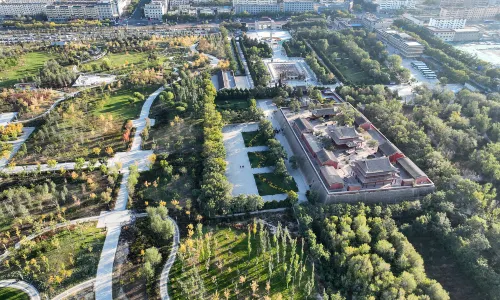
Leitai Han Tomb is absolutely fantastic, but the weather in October wasn't great—overcast and windy, so the glazed tiles on the city tower weren't very visible. Plus, it was cold, so it wasn't suitable to stay on the city tower for long. I also missed the sunset, which was quite a pity.
 54.8/5M29***51
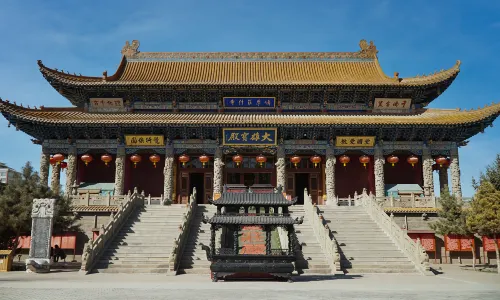
Wuwei Moroshi Temple is located at No. 53 North Street, Liangzhou District, Wuwei City, Gansu Province. It was built in the post-East Jin Liang Dynasty (386-403). It was a 17-year-old place where Chinese Buddhist Jingda translator Moroshi first entered the mainland. It has a history of more than 1600 years. The Temple of the Gomorash was built to commemorate the achievements of the high monks of the Western Regions, and translated the classics of the Buddha and the Buddhist teachings. It is a precious relics of studying Wuliang culture, Han Chinese Buddhism and Western Buddhism. The contribution of Gomorash is mainly reflected in the translation of Buddhist scriptures, Buddhist communication and talent training: he pioneered the translation of Buddhist scriptures, focusing on conveying the essence of Buddhist scriptures, rather than word-for-word translation, so that the translation is more in line with the Chinese expression habits. In the translation process, he introduced many Sanskrit words, enriching the vocabulary of Chinese, such as "Bodhisattva", "cause", "relaxation", "words", "world", "cross-shore", etc., which are still used today. He combines Buddhist teachings with Chinese traditional culture and promotes the localization of Buddhism in China. It laid the foundation for the spread of Buddhism in China. As an important cultural envoy of the Silk Road, he promoted cultural exchanges between the West and the Central Plains, allowing Buddhist culture to spread in a broader range. He cultivated a large number of excellent Buddhist talents such as Taosheng, monks and monks, Taorong, Seng Zhao, etc., they later became the ancestors of the Buddhist sect, which had a profound impact on the development of Buddhism.
 64.2/5M29***51
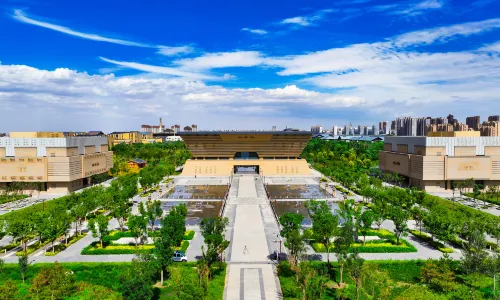
Located in Wuwei City, Gansu Province, Hexi Metropolis is a large-scale cultural and tourism complex integrating history and culture, natural scenery, and leisure and entertainment. Formerly known as Liangzhou, Wuwei was a key city on the ancient Silk Road. Historically, it served as the political, economic, and cultural center of the Hexi region, witnessing the succession and prosperity of multiple dynasties. Construction of the Hexi Metropolis scenic area began in October 2018 and took over four years. Built on the site of the Leitai Han Tomb, a former national 4A scenic spot where the "Horse Stepping on Flying Swallow" statue was unearthed, the project was built with a total investment of 5.803 billion yuan. Overall Layout: The overall layout of the scenic area can be summarized as "12333N," specifically one core area, two supporting facilities, three major venues, three major nodes, three themed blocks, and a series of distinctive highlights. Integrating heritage preservation, tourism, cultural exhibitions, leisure and entertainment, and supporting public service facilities, the Hexi Metropolis scenic area is the largest cultural and tourism complex in the province, jointly developed by the Provincial Public Transportation Group and the Wuwei Municipal Government. It is of great significance for fully tapping Wuwei's historical and cultural resources, building Wuwei into the "Chinese Tourism Iconic Capital", creating a new Silk Road city landmark, promoting the development of the province's cultural and tourism industry, and promoting the construction of the Silk Road Economic Belt.
 First snowfall at Tiantishan Grottoes creates a winter wonderland on social media | Dec 2025-Jan 2026

 No. 1 of Family-friendly Attractions in Wuwei