





 4.5/5
4.5/5 M27***06
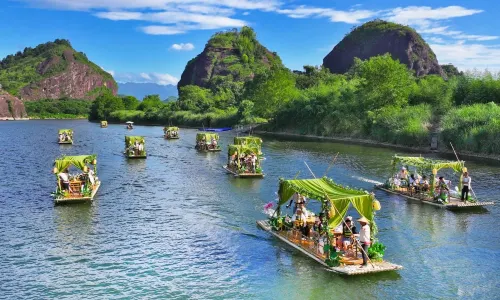
Longhu Mountain is located in Shangqing Town, Guixi City, Yingtan City, Jiangxi Province. In the middle of the East Han Dynasty, Zhang Daoling, the founder of the company, once made a Dancheng and the dragon and tiger are now, and the mountain is named because of its name. Tianmen Mountain is the highest, with an altitude of 1300 meters. Longhu Mountain is China's eighth world natural heritage, world geopark, national natural and cultural dual heritage site, national AAAAA-level tourist attractions, national key cultural relics protection units. Longhu Mountain is a typical Danxia landform landscape in China, the birthplace of Chinese Taoism, and joined the World Geopark Network in 2007. According to Taoist texts, Zhangling's fourth generation Sun Zhangsheng had settled in Longhu Mountain when he was in the Three Kingdoms or Xijin, and Zhang Tianshi's descendants lived in Longhu Mountain, and has inherited 63 generations and has passed through more than 1,900 years. On August 2, 2010, Dragon Tiger Mountain and Guifeng were added to the World Natural Heritage List.
 4.9/5
4.9/5 Anonymous user
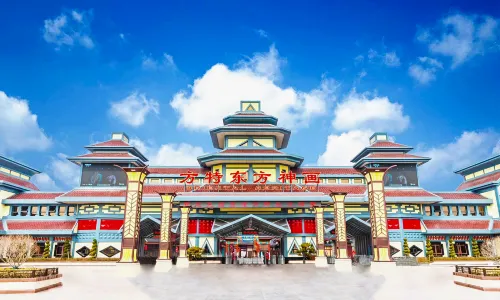
The amusement park was very fun, and the children had a great time. Except for the scene of Nuwa patching up the sky, the other scenes were booked very quickly.
 4.7/5
4.7/5 洋洋的种草日记@
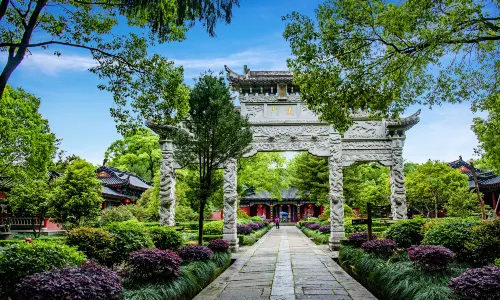
### Longhushan Tianshifu Review: The Millennium Inheritance and Modern Tourism Experience of Taoist Ancestors Longhushan Tianshifu, located in Shangqing Town, Yingtan City, Jiangxi Province, is the ancestral court of Taoism. Since the founding of Taoism in Zhang Daoling, the East Han Dynasty, it has been passed on for more than 60 generations, known as "North Kong and South Zhang". It is famous with Qufu Confucius Mansion. As an important symbol of Chinese Taoist culture, Tianshi Mansion not only carries a deep religious history, but also a must-visit place for tourists to explore the essence of Taoism. However, its tourism experience has been mixed due to commercialization and management problems. #### **History and cultural value** The Tianshi Mansion was built in the Ming Dynasty, and the existing buildings are mostly rebuilt in the Qing Dynasty. The scale is large and the layout is rigorous, which integrates the concept of Wangfu style architecture and Taoism and Zhengyi "Heaven and Man". The main buildings in the government include the gate, the lobby, the back hall, the private school, the teaching hospital, etc., of which the teaching hospital is an important place for Taoism, where tourists can observe the opening of the god of wealth and other ceremonies. The palace also retains precious cultural relics such as the Yuan Dynasty Tongzhong and Lingquanjing. Lingquanjing is rumored to be drilled by the Southern Song Dynasty Daoshi Baiyu Temple. The well water is Ganzi, which was used for the refinement of Dan. Tianshifu is not only a religious holy place, but also a living museum of Taoist culture. The Tianshi teachers of all generations have played and authorized here, which has a profound impact. Lu Xun once said: "China's roots are all in Taoism", and Tianshifu is the core carrier of this culture. ####**Tourism experience highlights** 1.**Daoist rituals and folk activities**: the prayer and blessings are held from time to time in Tianshifu, and tourists can participate in it and feel the solemn atmosphere of Taoist rituals. In addition, the folk performances in the ancient town of Shangqing (such as the real drama "Finding Dreams Dragon and Tiger Mountain") also incorporate Taoist mythology, and the lighting effect is shocking and worth seeing. 2. **Natural and humanistic integration**: Tianshi Mansion is surrounded by mountains and rivers, ancient trees are towering, and the environment is quiet. You can experience the fairy home artistic conception of "Yuyi often with smoke and glow" when walking. 3. **The mystery of hanging coffin and the coffin-lifting performance**: Although the hanging coffin performance is not in the Tianshi Mansion, as an important supporting attraction in Longhu Mountain, its thrilling coffin-lifting ceremony (4 sessions per day) shows the funeral wisdom of the ancient Yue people, becoming a must-see project for tourists. ####**Dispute and Inadequacies** 1. **Commercialization and "gongde" chaos**: Some tourists reported that there are problems such as Daoshi's induction of donations and fortune-telling charges in Tianshi's government. If someone is forced to accept 200-300 yuan "counting a fee", affecting the tour experience. 2. **Management omission**: The traffic scheduling of the scenic spot is chaotic, some tourists complain that the waiting time for the sightseeing bus is too long, and the staff is perfunctory. 3. **Construction restoration dispute**: Most of the buildings in Tianshifu are modern restoration, although they try their best to restore the historical style, but they are still criticized by some tourists for "lack of ancient meaning", especially the attractions such as Zhengyiguan are considered "newly built without characteristics". ####**Tour advice** -**Best time**: avoid winter (the scenery is monotonous) and peak tourist season, choose spring and autumn tours to avoid the flow of people. -**Itinerary**: It is recommended to visit Tianshifu and Longhushan main scenic spot (
 Free Admission Season at Longhu Mountain for East China Residents Begins | Dec 15, 2025-Dec 31, 2025
 Featured in 2026 China 50 - Cool Water Escapes
