





 4.5/5
4.5/5 火 火
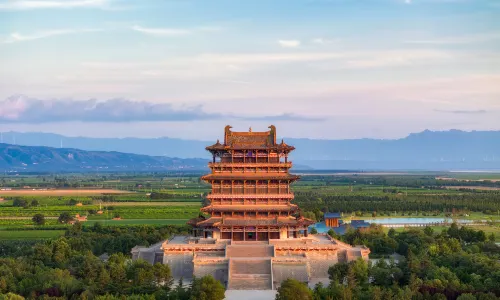
火 火The Yellow River scenic spot is located on the east bank of the Yellow River west of the ancient city of Zhangzhou, Yongji City, Shanxi Province. It is one of the four famous buildings in ancient China, and is famous for the Yellow Crane Tower, Yueyang Tower and Tengwang Pavilion. The building was built in the Northern Zhou Dynasty (557-581), and was built by General Yu Wenhu of the Northern Zhou Dynasty. It was originally a military building. Because there were birds inhabiting it, it was named "the ". It has been through the Tang and Song dynasties, and it has been around for more than 700 years. It was destroyed in the early years of the Yuan Dynasty. In 1997, the building began to be rebuilt and officially opened to visitors in 2002. After the renovation, the building was a Tang Gaotai pavilion, with four or three floors in appearance, six floors in interior, and a total height of 73.9 meters. The building was decorated with Tang Dynasty paint and color paintings, and the oil painting area reached more than 30,000 square meters, and the pattern was gorgeous and gorgeous. The building is based on the theme of Yellow River culture and Hedong culture, and shows historical allusions such as ploughing Lishan Mountain and Daqi Zhishui through colored European plastic murals and reliefs. The scenic spot is divided into famous building tourist area, Yellow River style tourist area, landscape tour area and recreational tour area. Among them, the famous building tour area includes the Gate Hall, Yuying Lake and Tangyun Square; the Yellow River style tour area has Zhangzhou style garden, Yellow River style museum and so on. Ticket prices: 54 yuan for the peak season (April 1st to October 31st), 45 yuan for the off-season (November 1st to March 31st). Opening hours: peak season 8:30—18:00, off-season 9:00—17:00.
 4.7/5
4.7/5 M50***61
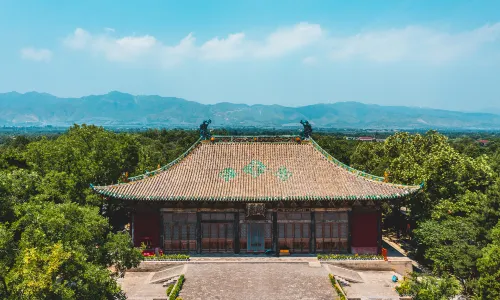
It is worth seeing, simple and elegant ancient buildings, beautiful murals, colorful flowers, how is it 4A scenic spot? There is a parking lot nearby, convenient, worthwhile trip, come back later
 4.8/5
4.8/5 小白日梦的旅行吧
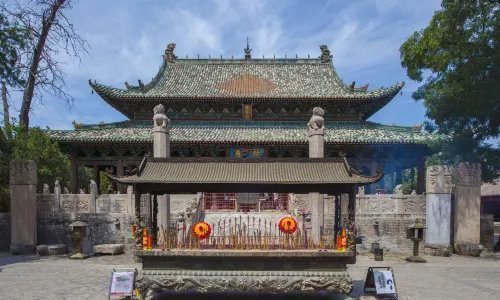
It is worth seeing here, after all, it is the Guandi Temple in the hometown of Guangong, which is ranked among the world's largest in scale and history, and can be said to be a place for royal worship of Guangong.
 44.4/5火 火
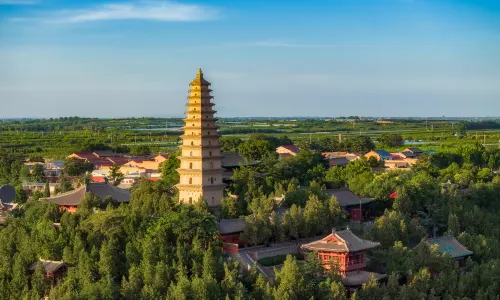
Pujiu Temple is located in Shantou, 3 kilometers east of the ancient city of Zhangzhou, Yunji City, Shanxi Province. It is a long-standing Buddhist Shifang Temple and is also the place where the love story of the classic drama "Xixiang Ji" is born. Pujiu Temple was built in the Sui and Tang Dynasties and has a history of more than 1,000 years. Originally called "Yongqing Courtyard", it is a Buddhist Shifang Temple. During the five generations and ten kingdoms, because the later Han General Guo Wei listened to the suggestions of the monks in the temple, he quickly decided to attack the city of Zhangzhou and rescue the people in the city. The monastery was renamed "Pujiu Temple". The layout of the temple building is three floors above and below, three axes in the east, middle and west. The west axis is the architectural style of the Tang Dynasty, with the Big Bell Tower, the Pagoda, the Louvre, the Wild Goose Pagoda, the Daxiong Palace, etc.; the central axis is the architectural style of the Song and Jin two generations, including the Temple of Heavenly Kings, Bodhisattva Cave, the Mituo Palace, the Luohan Hall, the Ten King Hall, the Tibetan Jing Pavilion, etc.; the East axis is the Ming and Qing shape, with monks and dead wood halls. Yanta: The Yanta in the temple was built in Ming Jiajing 43 years (1564), more than 400 years of history, the tower is39.5 meters high, 13 floors. The tower is known for its strange structure and obvious echo effects. Tourists hit the side of the tower with stones, and the tower will make a crisp and pleasant howling, known as the "pure rescue sound", which is one of the eight scenes of Yongji in ancient times. Back garden: The back garden is a lively garden garden, the park is stacked with stone rockery hanging dangerous like cutting, slang double pavilion moths. The cross-framed winding bridge on the lotus pond, the pavilion bridge is connected, and the lake and mountain are connected. The "bay platform" of the cypress is hidden in the green pine and green cypress, and the bamboo is repaired in the thousands. The attractions related to "Xixiang Ji": There is Zhang Sheng's "Xixiang" in the temple, Cui Wei's "Lihua Deep Courtyard" for a sojourner, and Zhang Sheng's "Shuzhai Yard" after the release of Baima. These attractions are closely connected with the plots in "Xixiang Ji". Ticket price: 50 yuan. Opening hours: peak season (April 1st - October 31st) 08:30—18:00; off-season (November 1st - March 31st) 09:00—17:00.
 54.7/5
 飞扬的燕燕
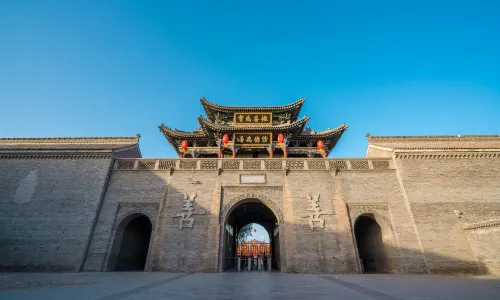
飞扬的燕燕The ancient residential buildings of Lijia Courtyard are exquisitely designed and exquisitely crafted. It fully reflects the unique style of Ming and Qing residential buildings in China. It has extremely high ornamental, tourism and historical value. It is also a unique treasure house of ancient architectural art. It is a study of traditional residential buildings in northern Henan. It is of great significance to inherit and develop our traditional culture and realize the protection and utilization of traditional residential buildings, and it is also of great reference value to study the architectural art of Ming and Qing Dynasties.
 64.8/5
 pshr
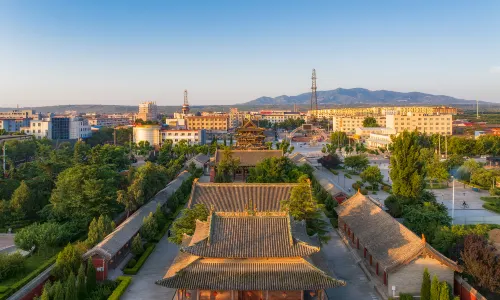
pshrWanrong Feiyun Tower, located within the Dongyue Temple in Wanrong County, Yuncheng City, Shanxi Province, was built during the Zhengde reign of the Ming Dynasty. Together with the Yingxian Wooden Pagoda, it is known as the "South Tower and North Tower," a pinnacle of Chinese pure wooden architecture. Standing 23.19 meters tall, with three visible stories and five concealed floors, the tower is constructed without a single nail or rivet, relying solely on 345 sets of brackets and mortise and tenon joints. It appears to soar like a cloud, seemingly swirling through the air. Four towering cypress columns pierce the roof, while 32 eaves and corners are adorned with glazed tiles and warrior statues, embodying the grandeur of the Tang Dynasty and the sophistication of the Ming and Qing dynasties. A National Key Cultural Relic Protection Site, Feiyun Tower is not only a living example of ancient architectural craftsmanship but also a landmark of the Yellow River Cultural Belt, thanks to its remarkable appearance of being "half embedded in the clouds."
 74.3/5
 M50***07
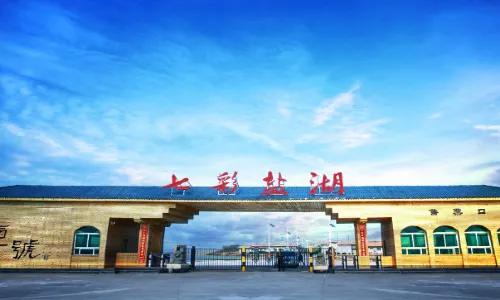
I received a lucky card during the National Day holiday, and the four adults and two children saved hundreds of dollars on tickets. Hahaha, it rained, and the salt lake was foggy. I didn't see the seven-color fish, but I saw the three-color fish. I caught a few brine shrimps and released them when I left.
 84.7/5
 M82***84
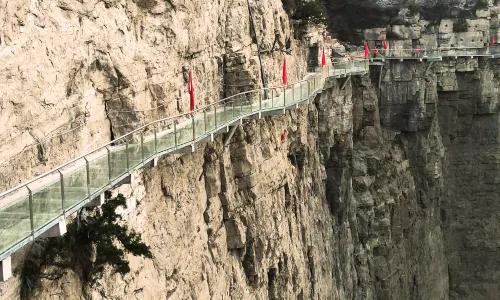
The attractions are small and lack distinctive features; besides being tiring, there's little reason for people to stay. It would be better if it were developed into a revolutionary historical site. This is purely my personal suggestion.
 94.8/5飞扬的燕燕
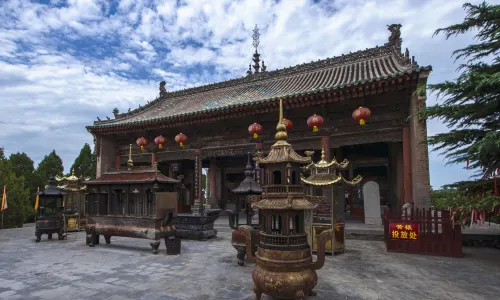
The history of the post-Tuyu is worth remembering: the Han Wu emperor Yuan-hunt two years (121 BC) built after the Tuyu, the post-Dongyue Fengzen, the Yuyin-Yuan-Yuan-Yuan-Yuan-Yuan-Yuan-Yuan-Yuan-Yuan-Yuan-Yuan-Yuan-Yuan-Yuan-Yuan-Yuan-Yuan-Yuan-Yuan-Yuan-Yuan-Yuan-Yuan-Yuan-Yuan-Yuan-Yuan-Yuan-Yuan-Yuan-Yuan-Yu The emperor of Han Wu visited the festival many times and left a famous "Autumn Wind Speech". The emperor of Han Xuandi, Yuandi, Chengdi, Aidi and the emperor of Eastern Han Guangwu all came to this sacrifice 11 times. During the Kaiyuan period (713-741), Tang Xuanzong Li Longji came to this sacrifice three times and expanded the temple. Four years (1011), Song Zhenzong Zhao Heng repaired the post-Tuyu, and the imperial book of the "Yuyin two holy and matched the Ming" monument. During the Ming Long Qing Dynasty (1567-1572), the Yellow River was swung eastward, and the Yellow River was eroded, and the back soil on the Yellow River was threatened by the torrent and was in danger of being submerged at any time. During the Ming Wanli period (15731620), the Houtu Temple was repeatedly affected by the Yellow River, and it was relocated twice and engulfed by the Yellow River. During the 12 years of Qing Shunzhi (1655), the Yellow River water was determined. Most of the buildings in the Houtu Temple were washed away by the Yellow River, leaving only the autumn wind building and the gate hall. In the first year of Qing Kangxi (1662), the Yellow River was re-solved, and even the autumn wind building was submerged in the Yellow River. In the second year of Qing Kangxi (1663), the land was rebuilt in the north of the village of Jinmiaoqian. In the six years of Qing Tongzhi (1867), the land was washed away by the Yellow River again. After the nine years of Tongzhi in Qing Dynasty (1870), Tuqian was rebuilt on the high cliff in the north of Miaoqian Village, and has been preserved to this day, and has a history of more than 150 years.
 104.3/5西胡
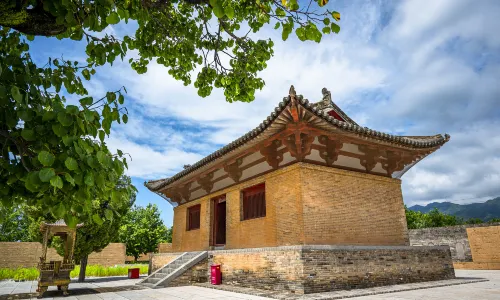
Leaving the spacious and bustling entrance plaza of Yongle Palace, we arrived at Guangrenwang Temple in the village, the most ancient and pristine Tang Dynasty temple. The surrounding area felt perfectly integrated with real life, making it truly exceptional.
 No. 1 of Family-friendly Attractions in Yuncheng

 Free Ticket Giveaway for Guan Gong's Hometown in Yuncheng | Nov 18, 2025-Dec 31, 2025