





 4.7/5
4.7/5 洪虹
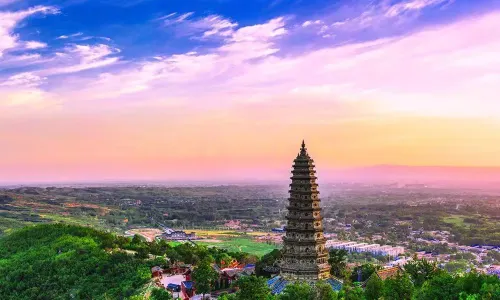
洪虹We took a sightseeing bus from the Lower Temple to the Upper Temple. The first thing that caught our eye upon disembarking was the shimmering glazed tiles of the Flying Rainbow Pagoda. The current pagoda was built in the sixth year of the Jiajing reign of the Ming Dynasty (1527), and glazed tiles were added to the pagoda in the second year of the Tianqi reign of the Ming Dynasty (1622). It is the "world's tallest multicolored glazed pagoda." With Ming Dynasty blue bricks as its base, the yellow, green, and blue glazed tiles, despite centuries of weathering, remain vibrant. The 13-story octagonal pagoda gradually narrows, and the glazed components on each level are different, each layer unique, so exquisitely crafted that it's impossible to look away.
 4.6/5
4.6/5 Rainbow Hui
I was originally torn between joining a group tour or chartering a car. The former offered a guide who could explain the route, rather than just visiting the area. Luckily, I chose this tour. Guide He was incredibly helpful and professional. He explained the scenery along the way and, at the most important sights, he also allowed us ample time for photos.
 4.7/5
4.7/5 过尽千帆。
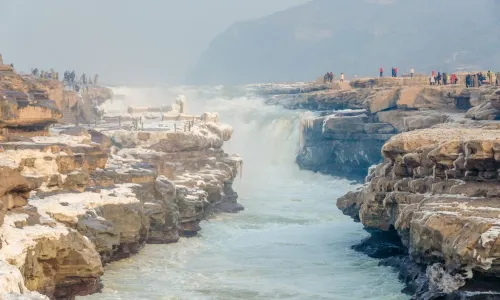
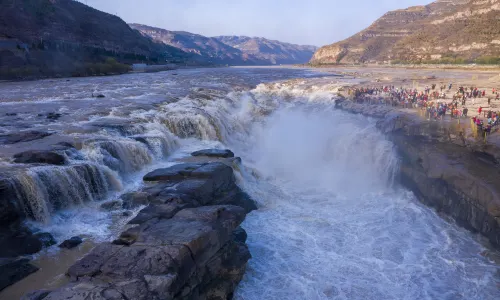
过尽千帆。Hukou waterfall is majestic, like a thousand horses running and gushing, the Yellow River here split the canyon, the turbulent water flow down, the earth shaking, the sound like thunder, like thousands of horses in the sand field battle, people's heart tide, sigh the power of nature. Come to Hukou, see the Yellow River water from the sky, rush to the sea never return spectacular scene!
 4.8/5
4.8/5 _FB***60
The driver was punctual, calling and texting the night before to confirm. Because it was the off-season, I was the only customer today. They all departed on time and didn't solicit passengers on the street or cancel their trips. The route was direct, taking about 2.5 hours. The price was also cheaper than other travel agencies. Highly recommended. Also, Xiaoxitian is definitely worth visiting; the five-hour round trip is well worth it.
 4.5/5
4.5/5 火 火
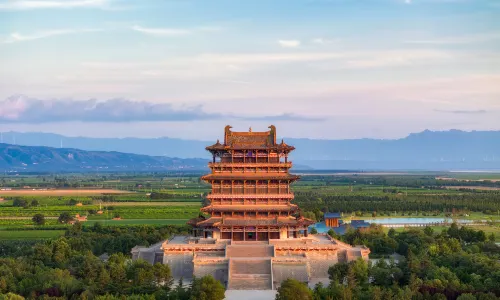
火 火The Yellow River scenic spot is located on the east bank of the Yellow River west of the ancient city of Zhangzhou, Yongji City, Shanxi Province. It is one of the four famous buildings in ancient China, and is famous for the Yellow Crane Tower, Yueyang Tower and Tengwang Pavilion. The building was built in the Northern Zhou Dynasty (557-581), and was built by General Yu Wenhu of the Northern Zhou Dynasty. It was originally a military building. Because there were birds inhabiting it, it was named "the ". It has been through the Tang and Song dynasties, and it has been around for more than 700 years. It was destroyed in the early years of the Yuan Dynasty. In 1997, the building began to be rebuilt and officially opened to visitors in 2002. After the renovation, the building was a Tang Gaotai pavilion, with four or three floors in appearance, six floors in interior, and a total height of 73.9 meters. The building was decorated with Tang Dynasty paint and color paintings, and the oil painting area reached more than 30,000 square meters, and the pattern was gorgeous and gorgeous. The building is based on the theme of Yellow River culture and Hedong culture, and shows historical allusions such as ploughing Lishan Mountain and Daqi Zhishui through colored European plastic murals and reliefs. The scenic spot is divided into famous building tourist area, Yellow River style tourist area, landscape tour area and recreational tour area. Among them, the famous building tour area includes the Gate Hall, Yuying Lake and Tangyun Square; the Yellow River style tour area has Zhangzhou style garden, Yellow River style museum and so on. Ticket prices: 54 yuan for the peak season (April 1st to October 31st), 45 yuan for the off-season (November 1st to March 31st). Opening hours: peak season 8:30—18:00, off-season 9:00—17:00.
 4.3/5
4.3/5 娃哈哈.偶尔也会发呆
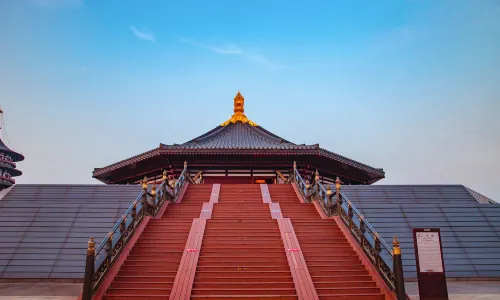
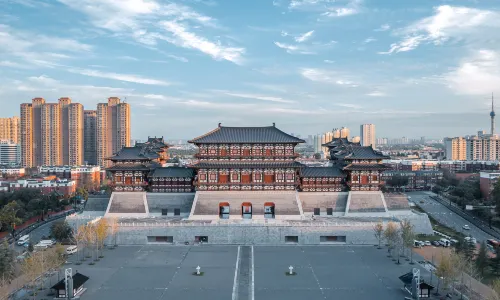
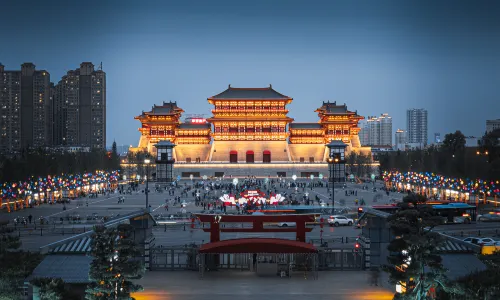
Paradise Mingtang net red punch card holy place Paradise Mingtang should not spend a lot of money to enter the night ticket for the thousand-year-old Sui Tang Ganjin Capital: 88/person half price/45/person, free ticket opening time for people under 12/60 years old: 9:00-23:00 Scenic Area lighting time: 19:00 Transportation: It is best to park the bus around at night 8.26.33 Road and so on Metro Line 1, Yingtianmen Station, C2/A Exit Paradise Mingtang is a rebuilt ancient site. The real Paradise Mingtang is much larger than the rebuilt. There are ruins and records in the park. Paradise and Mingtang are the core buildings of Luoyang City, the Sui and Tang Dynasty, and the palace city was built during the Wuzetian ruling period. In 684 AD, Wu Zetian took Luoyang as the capital of the gods, replacing Chang'an as the political center, and it is also the place where China's only orthodox female emperor (Wu Zetian) ascended to power. The Mingtang has two floors. The first floor is the original Mingtang ruins (only one pillar pit). The surrounding area is some things and small performances about Wuzetian. The second floor is the core punching area of Mingtang. It is the place where Wuze Tianchao government was in the past. It can be described as magnificent at a glance. It is also the best C position for indoor photos. The nine floors of the five-story outer heaven, the imperial ceremony system that is the honor of the nine-fifths, take the elevator to the nine-story, the white view of the gods are good scenery, the night feels the Tang Dynasty, the 2-8 floors are commercialized, it is not recommended to waste physical energy on the first floor for the paradise site (or a pillar pit). Paradise Mingtang is mainly based on punching in and taking pictures. If you love history and culture, you may wish to enter the visit. If you need to explain, you can find a more cost-effective fish. You can come here with a beautiful makeup. After returning to Sui and Tang Dynasty 7:39, feel the princess trip. Personal advice is not recommended to buy tickets to enter. It is good to makeup when you punch in and take pictures: The price is 68-300+, mainly based on clothing accessories and makeup, deposit 100-200 (some stores can be exempted from deposit). As for makeup technology, you don’t have to worry, you can be satisfied, communicate and adjust at any time, as long as you want the style, each store can make it, The only difference is the variety of clothing and accessories in the store. Makeup shop: all concentrated in Yingtianmen to Luoqi Ancient City, there are also some in the office building (most concentrated is Luoqi Ancient City) except for the peak season, no matter how much to go to that place to bargain, maybe more cost-effective than your group purchase. Photography: Yingtianmen single 3.5-5 yuan/Zhang, package 68-299 yuan, respectively 15-30 negatives + 5 photos (can be tried first, in the determination) There is a (pit) and another (Weiyang indigenous is not convenient to say here, afraid of being attacked by the group,) As Luo (if the money is not bad), please ignore it. If necessary, there are also temporary rental card machines/patches/SLRs/photograph equipment, dozens to hundreds. Personal suggestion: because the background is strong, it is also a blockbuster film everywhere, but it is best to bring a supplement light. Tired of playing, there are night markets around, but there is nothing to recommend food [price ratio]
 4.3/5
4.3/5 _TI***n2
It's a magnificent and wonderful place. You can feel the historical atmosphere. You can take the elevator to the top, so be sure to enjoy the view from there.
 4.4/5
4.4/5 E27***48
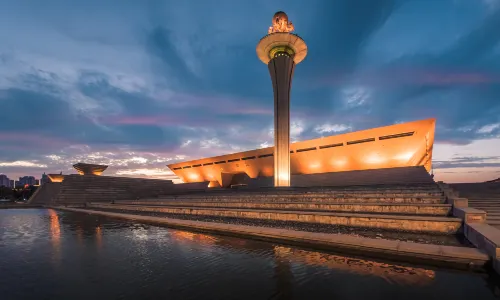
A little expensive based on what you're getting. But worth a one time experience to go up the gate/wall to view it from the top. The best Instagram able spot requires the meal experience package. Do take note
 4.7/5
4.7/5 Anonymous user
The tour guide's explanation was incredibly detailed, showcasing her passion for history. She used simple and easy-to-understand methods to help us grasp the general history of Luoyang's 13 dynasties.
 4.7/5
4.7/5 206***26
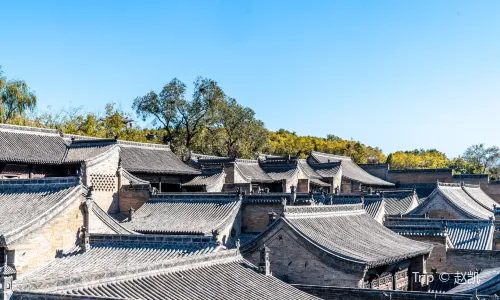
Come to Pingyao, in addition to Shuanglin Temple and Zhenguo Temple, the Wangjia Courtyard is worth a long time to visit. Jinshang Courtyard, like the garden in Jiangnan, is not only a mansion, but a three-dimensional book about the rise and fall of the family and the civilization of the region. In different times and spaces, these courtyards reflect the combination of the owner's taste, taste and lifestyle, and convey the precepts of poetry and ritual heirloom to future generations.

