





 4.1/5
4.1/5 M83***34
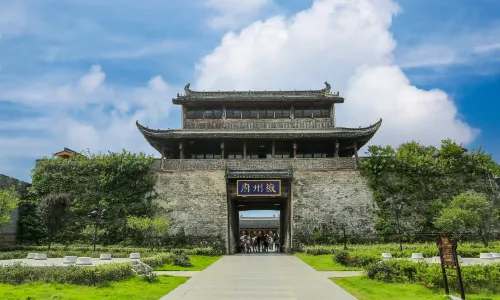
The ancient city of Huizhou is located in Huicheng Town, Jixian County, Huangshan City, Anhui Province. Since the Tang Dynasty, it has been the seat of Huijun, Zhou and Fuzhi. The county and Fuzhi are in the same city, forming the city style. It is the birthplace of "Hui Xue" and is known as "the state of Southeast Bolu and Etiquette". The ancient city is divided into inner cities and outer contours, with 4 gates and many cultural relics. It was listed as a famous national historical and cultural city in 1986, and became part of the ancient Huizhou cultural tourism area of the national 5A-level scenic spot in 2014.
 4.5/5
4.5/5 Wenjingz
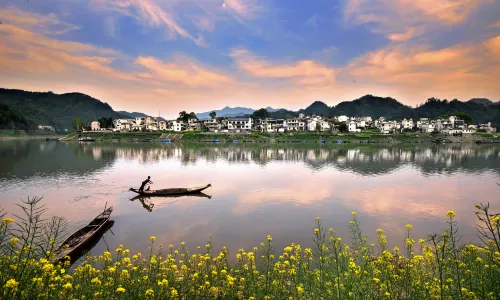
Landscape Gallery of Xin’an River — A Moving Ink Painting Sailing along the Xin’an River feels like gliding through a Chinese scroll painting. Misty peaks, white-washed villages, and bamboo forests line the peaceful waters—every bend reveals another picture-perfect scene.
 5.0/5
5.0/5 黄戈ALEX
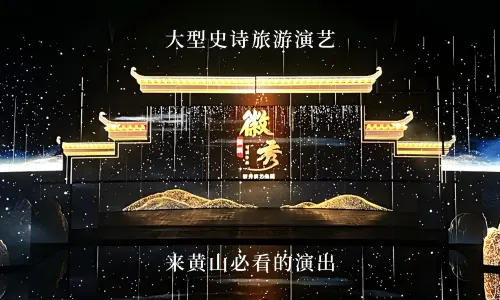
- With Hui culture as the core, the show tells the story of Huizhou from Emperor Huangdi to the present through six chapters, covering Huizhou merchants, Huizhou troupes, Huizhou women, etc., showing the spirit of Huizhou merchants, Huizhou camel spirit, and Huangshan pine spirit. - Integrating various art forms such as Hui opera and Huangmei opera, the folk customs and historical humanities of ancient Huizhou are integrated into it, allowing the audience to deeply appreciate the profoundness of Hui culture
 44.3/5
 嫣 然
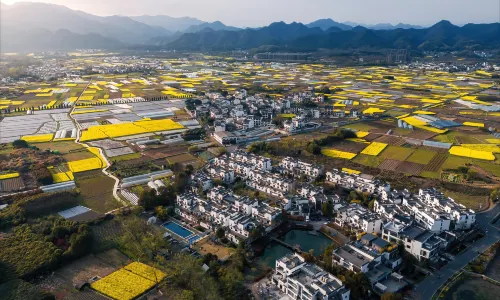
嫣 然Xixinan Ancient Village: The secret of Huizhou, hidden by Hongcun, hides undominated wild fun** Millennium ecological code, live fireworks, poetic experiments of new and old coexistence**###**1, the ecological code of the Wizard of Oz from Shuikou Forest to Fengyang Forest Millennium wisdom** Xixinan Fengyang Forest wet The land is a living specimen of the ancient village of Huizhou "Water Estuary Garden". The Fengle River at the entrance of the village draws water into the village with the force of nature, forming a trinity of "mountain-water-forest" ecological pattern. The ancient ginkgo, moss slate and stream together weave the wisdom of Tang and Song Dynasty water conservancy projects - there is no deliberately carved garden, only the wild beauty of nature and humanities. In the early morning mist, the sun penetrated the maple and poplar branches and sprinkled into the stream, as if entering the green picture of "Thousands of miles of rivers and mountains". **Deep insight**: Shuikou Forest is not only a scenery, but also the awe of the ancestors of Huizhou for Fengshui. They regulate the climate with natural force and conserve water, and this ecological view of "heaven and man in one" is just a revelation of the revitalization of contemporary rural areas. ---###**Second, the undominated fireworks - the living Ming and Qing ancient villages** Unlike the regulation of Hongcun and Xidi, the wildness of Xixinan is hidden in the details: dried plums on the bluestone road, old people sitting around playing cards in front of the old house, and children chasing play by the stream. More than 100 Ming and Qing buildings are reserved in the village, but there are no tickets and excessive commercialization. Tourists often pass by with villagers carrying flat slabs, and the eggs and dried plum and vegetable sesame cakes are sold at random at the village entrance market, at a simple price as 20 years ago. **Critical thinking**: When most ancient villages are reduced to "open-air museums", Xixinan's preciousness lies in "life is exhibition". Its beauty is not in carved beams and paintings, but in fireworks and rice oil and salt. ---### **3. The experimental field of new and old symbiosis When the ancient village meets the township of the young people ** Xixinan's uniqueness lies in the tolerance of "new and old symbiosis": the old house in the Ming and Qing Dynasties was transformed into a design homestay, but insisted on the texture of "repairing the old as old"; The artist's studio is hidden in a century-old temple, where modern paintings live in one room with Huizhou wood carvings. What's more, it attracts nearly 100 "township creators" - not tourists who stay for a short time, but hand-crafters, curators and ecological researchers who have roots in the village. They take the ancient village as a laboratory, exploring plant dyeing, innovation of local ingredients, and micro-art exhibitions, so that traditional skills and modern aesthetics can be quietly dialogued. Case revelation: A designer transformed the abandoned courtyard into a public library, with Huizhou culture as the main collection, and regularly held villager reading clubs - this "moderate intervention" may be more sustainable than commercial development. ---###**Fourth, hidden in the green shade of red gene - the dual narrative of the New Fourth Army station** The maple poplar forest in Xixinnan is not only an ecological barrier, but also a witness to history. In 1938, the third detachment of the New Fourth Army was stationed here, and the ancient forest became a natural training ground, and the Shuikou residential area became a temporary command. Today, the village still retains the red site and passes the theme party
 54.5/5
 BenInsight
Amazing place to enjoy the nature in any weather. Huge waterfall many cascades Price is 95 rmb2 hours both waysInsight you can go high roupe challenge with small ziplines (but might be slow since you have to go with a group) 3 options: 5 stops 50 rmb , 11 stops 98 rmb, 22 stops 198 rmb. Can get a discount from a driver from my other post.Bring your own water bottle.Path is concrete stairs all the way.Might be bit crowded.
 No. 5 of Night Attractions in Huangshan