





 4.6/5
4.6/5 Prince of Pusan
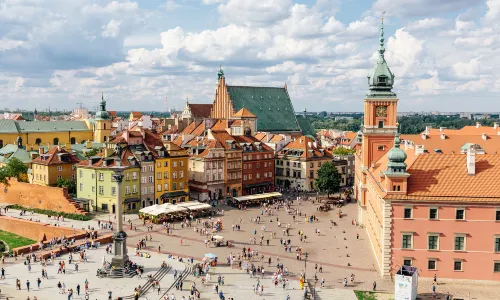
Warsaw’s Old Town is a stunning testament to the resilience and rich history of the Polish people. Originally established in the 13th century, this UNESCO World Heritage Site was almost entirely destroyed during World War II but has been meticulously reconstructed. Walking through the cobbled streets, visitors can feel the blend of medieval charm and historical significance in every corner, from the colorful facades of historic tenement houses to the grandeur of the Royal Castle, which offers a fascinating glimpse into Polish royalty and national history.Market Square is the heart of Old Town, where vibrant cafes, restaurants, and shops offer everything from traditional Polish cuisine to charming souvenirs. Statues and monuments, such as the iconic Mermaid of Warsaw, add to the area’s character and reflect the deep cultural symbolism of the city. Nearby, St. John’s Archcathedral and other churches showcase exquisite architecture and house important religious relics.Whether you're a history enthusiast, a culture seeker, or simply looking for a beautiful place to explore, Warsaw’s Old Town offers an unforgettable experience that celebrates Poland's endurance, beauty, and cultural heritage. It's a place where past and present beautifully coexist, making it a must-visit for anyone coming to Warsaw.

 4.2/5
4.2/5 Sammy0618
Royal Castle, originally built between 1598 and 1619, was the site of the drafting of Europe's first modern constitution and the world's second written national constitution—the Constitution of 1793. (The world's earliest written constitution is the United States Constitution of 1788). Historically, Royal Castle has been repeatedly damaged and looted by Swedish, Brandenburg, German, and Russian troops. It suffered severe damage during World War II but was rebuilt to its original design after the war.
 4.1/5
4.1/5 yxj003
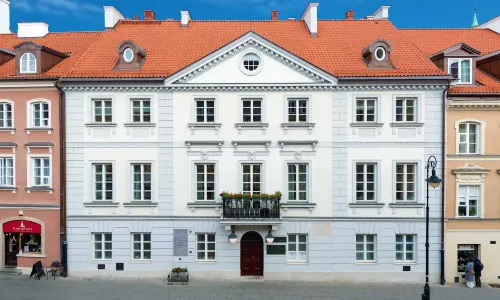
Marie Curie is an immortal name in the history of world science. This great scientist, the founder and pioneer of radiochemistry and radiophysics, a pioneer in radioactivity research, and known as the "Mother of Radium," won two Nobel Prizes, the only female scientist to receive this honor.
 44.6/5
 Tomasz
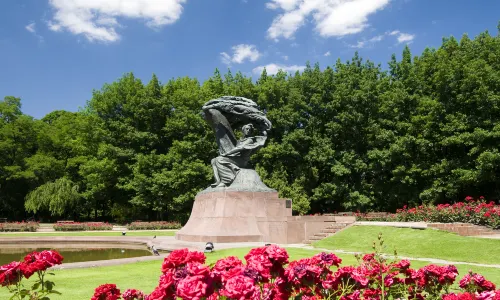
Must see attraction in Łazienki Królewskie (Royal Bath) Park. The monument is very expressive and bigger than anticipated.
 55.0/5
 je ne sais quoi
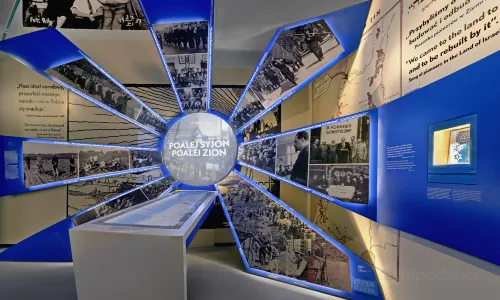
Out of all the incredible things I experienced during my trip to Warsaw last week, the POLIN Museum of the History of Polish Jews truly stole my heart. I'd heard whispers about it, but nothing prepared me for the sheer scale and emotional depth of this place. It's a museum dedicated to telling the thousand-year story of Jewish life in Poland, a country that was once home to one of the largest and most vibrant Jewish communities in the world. Walking through its vast halls, you gain a profound understanding of this rich history, and the impact of its tragic near-obliteration during the Holocaust, after which the majority of survivors emigrated to Israel and elsewhere.The museum itself is an experience from the moment you step inside. The airy entrance hall, complete with a welcoming cafe, gives you a sense of the journey you're about to embark on. And speaking of journeys, the audio guide you receive with your incredibly affordable student ticket (only 35 PLN!) is a game-changer. Forget fumbling with numbers and trying to match them to exhibits – this innovative headset somehow knows where you are in the museum and narrates the story accordingly! It's like having a personal historian whispering in your ear, allowing you to truly immerse yourself in each section without feeling rushed. With over ten languages available, it's accessible to so many visitors.Beyond the brilliant audio system, the museum is a visual feast. The exhibits are thoughtfully designed and incredibly engaging, bringing history to life in powerful ways. I was particularly struck by a breathtaking fresco depicting a Jewish religious site – it was a moment of pure beauty amidst the weight of history. For anyone traveling solo, like I was for part of my Warsaw adventure, the POLIN Museum is an absolute gem. You can wander at your own pace, linger over the exhibits that resonate with you, and truly absorb the information without feeling the need to keep up.
 64.0/5
 Kim~ Keep on EXPloring
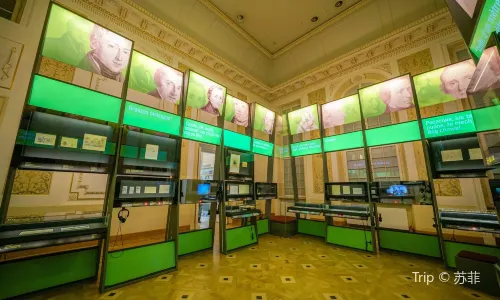
Born on March 1st, 1818 in Żelazowa Wola, Fryderyk Chopin is Poland‘s greatest composer and Warsaw‘s favourite son. He has lent his name to everything from vodka to airports. An early age musical prodigy, his life as a musician was full of success. As that of many other artists, however, it was marked by unrequited love, exile, illness, bankruptcy and solitude. He died at age 39 in Paris. His compositions live on and have become a source of Polish national pride. Taking up four floors the museum features an interactive style and shares the life of Chopin from start to finish leaving absolutely no detail out. Among the 5,000 exhibits are a lock of hair, his school exercise books, a sweet box, a gold watch presented to the ten year old Frederic by an admiring Italian singer and the passport he used to enter England. So comprehensive is the collection it even features the last letter he wrote to his family and dried flowers from his deathbed. Also, of course, are several paintings and sculptures (including his death mask), a recreation of his Paris drawing room, and even an intriguing section on the women who made the man. One area that is particularly popular is the Composer's Hall, an area where you can listen to all of Chopin's music. Mr Chopin, welcome to the 21st century.
 74.2/5je ne sais quoi
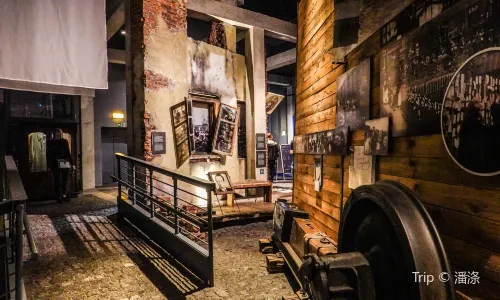
If you are in Warsaw, one thing you will realise very quickly - not just in the history but in the very psyche of the city - is that almost all of Warsaw (84%) was destroyed during the Second World War, and any classical-looking buildings you see especially in the Old Town are replicas of the originals built after the war. Along with Dresden and Manila, Warsaw was among the worst destroyed in the war, and the reason is because the Germans razed the city to the ground as a “punishment” for the 1944 Warsaw Uprising.To find out more about the uprising, there is no better place to learn about it than the Warsaw Uprising Museum (Muzeum Powstania Warszawskiego), which I visited in May. It is a large museum with many exhibits across several floors, bringing you through interactive displays, artifacts, written accounts, and other testimonies of how life was during the German occupation of Warsaw, the uprising, and its aftermath. There are displays dedicated to each district of Warsaw. There are many free informative leaflets and flyers (in Polish and English), including 63 calendar pages covering the dates from 1 August 1944 to 2 October 1944 – each containing a summary of the most important events that took place on that particular day of the uprising.Definitely should go here to understand not just the particular 1944 uprising but also the Second World War as a whole as many exhibits link this to the broader European war. A history buff like me would definitely love exploring yet be moved by the more personal and emotional artifacts.#poland #warsaw #history
 84.2/5
 D了个Y
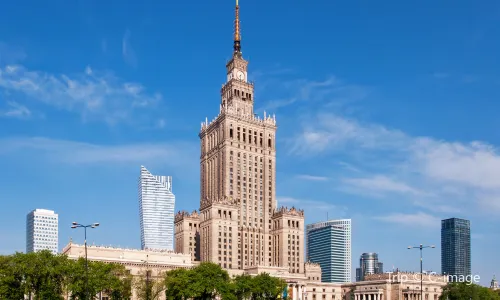
D了个YIt is the most worthy tallest building in Warsaw, with a total height of 234 meters. It was built by the former Soviet Union and presented to Warsaw. It has a strong former Soviet architectural style and is a landmark building in Warsaw. It is called "Stalin's syringe" or "Russian wedding cake". However, such a beautiful building is completely inconsistent with the style of the surrounding new town and the old town in the distance. The complicated historical process has made the Poles have a complex feeling of love and hate for this building. It is said that there is a lot of space inside and various exhibitions are often held. This reminds me of the "Sino-Soviet Friendship Building" in Shanghai. Haha, it is indeed a building of the same style.
 94.1/5Sammy0618
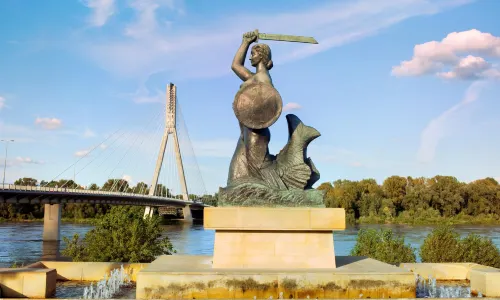
The Little Mermaid statue in Warsaw (Polish: Pomnik Syreny w Warszawie) is located in the Market Square of Warsaw's Old Town, the Polish capital. It was created by Konstanty Hegel in 1855. The mermaid is a symbol of Warsaw and its patron saint. Since the 16th century, the mermaid has appeared on Warsaw's coat of arms, and many mermaid-related items can be found throughout the city. The statue currently standing in the square is not the original 1855 statue, but a modern replica cast in zinc. The original bronze mermaid is currently on display at the Warsaw History Museum. The most famous legend tells of how, long ago, the two daughters of Triton, the messenger of the sea in Greek mythology, embarked on a journey across the ocean depths. One of them decided to remain on the Danish coast, at the entrance to Copenhagen harbor, where the famous Little Mermaid statue now stands. Another mermaid, upon reaching the mouth of the Vistula River, jumped into the water and later rested on the beach near the village of Warsaw. Fishermen flocked to admire her beauty and listen to her melodious song. However, a greedy merchant also heard her song, followed the fishermen, and captured the mermaid. Another legend tells of a mermaid who fell in love with Griffin, the city's guardian, and decided to swim from the Baltic Sea to Warsaw. However, Griffin had already died fighting against the Swedish invasion. To avenge her, the mermaid succeeded Griffin as the guardian of Warsaw and the symbol of the city.
 104.0/5
 TALAL MOHAMMAD HUSSEINY
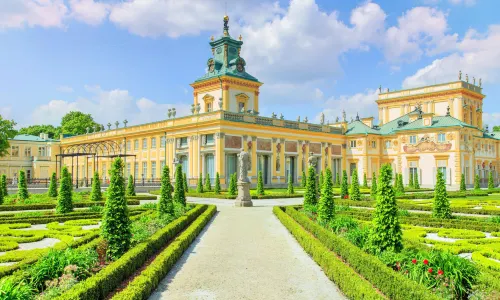
This palace is nice and informative from the inside but not that big.The garden is impressive but not as impressive as versatile in France of course.

