Trip.com New User Perk | 5% OFF Mainland China Rail
⚡ Rail Flash Deal | Get HK$65 for just HK$29.9
Cross-Border Rail Voucher Pack! Pay HK$29.9 to unlock HK$65 in savings on high-speed rail trips.


If you are living in Hong Kong or using the city as your launchpad into Asia, taking the bullet train from West Kowloon Station straight into Mainland China is easily one of the smartest ways to travel. There are no airport liquid bans, virtually zero weather delays, and trains glide cleanly into downtown terminals at over 300 km/h.
Yet for international travellers holding foreign passports, one detail causes endless pre-trip confusion: high speed rail e-tickets.
Does a digital PDF actually open the turnstiles? What happens if you book via Trip.com versus the official China Railway 12306 app? And what should you do if an automated station gate flashes red when you scan your passport?
Having navigated both West Kowloon Station and major hubs from Guangzhou to Shanghai on a foreign passport, I’ve put together this no-nonsense 2026 guide covering everything you need to know—from booking and passport verification to breezing through station barriers.
Cross-Border Rail Voucher Pack! Pay HK$29.9 to unlock HK$65 in savings on high-speed rail trips.


China Railway operates a fully paperless, real-name electronic ticketing system across virtually all bullet trains (G, D, and C series) as well as traditional overnight trains.
Here is the deal: your original physical passport is your ticket.
When you purchase high speed rail e-tickets online, your seat reservation is digitally bound to your passport number in China Railway's central database. You no longer need to wait in long queues at station ticket windows to print blue or magnetic paper stubs before boarding.
Crucial Myth-Buster: When you receive an e-ticket PDF or confirmation email from a booking platform, that document is your itinerary receipt—showing your train number, carriage, and seat—not a physical boarding pass. A printed paper screenshot or Trip.com PDF barcode will NOT open the station turnstiles on its own. You must bring the exact original passport used during booking!

International travelers have two primary platforms for booking trains. Both pull from the exact same real-time China Railway seat inventory, so train availability and seat classes are identical—the difference comes down to convenience and payment flexibility.
Feature | Trip.com | Official Railway 12306 (12306.cn/en) |
|---|---|---|
Interface & Language | Full, seamless English interface (web & app) | English website and English app mode available (occasional Chinese prompts) |
Pre-Booking ID Check | None required—simply type your passport details at checkout | Mandatory verification (Zhengjian Heyan / 证件核验) before buying; requires uploading passport photo + up to 24-hour approval |
Payment Methods | Visa, Mastercard, Amex, Apple Pay, Google Pay, PayPal | International Visa/Mastercard supported, alongside Alipay & WeChat Pay (can occasionally reject foreign banks) |
Booking Fees | Small transparent service fee on tickets | Zero booking fee |
Best For | First-time visitors, busy expats, and anyone booking last-minute | Frequent travelers inside China who want zero fees and official waitlist (Houbu / 候补) access |
If you want to skip clunky registration forms and verification delays, booking through Trip.com is hands-down the smoothest method for foreign passport holders:
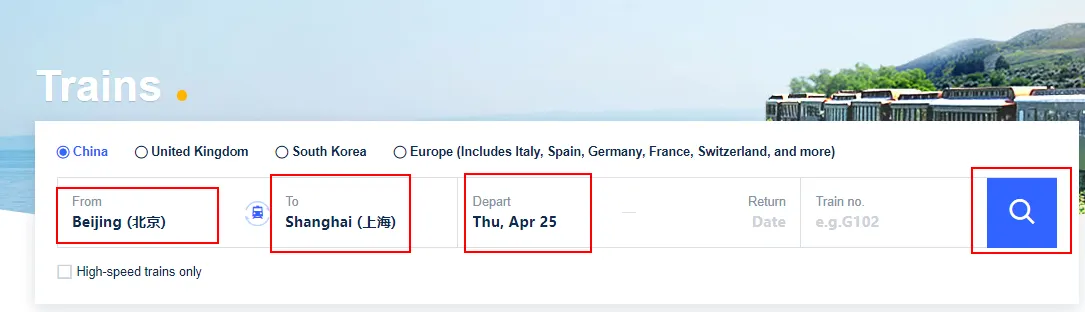
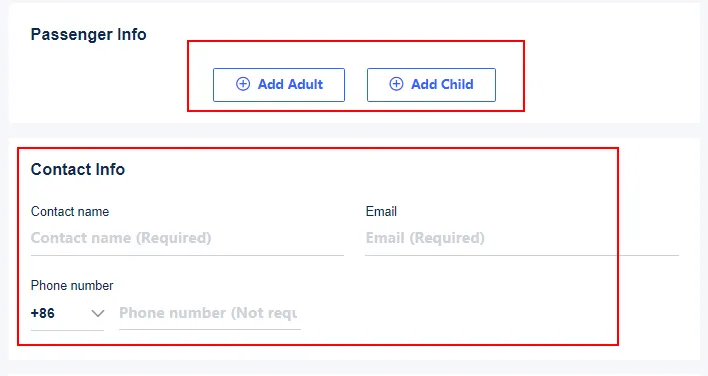
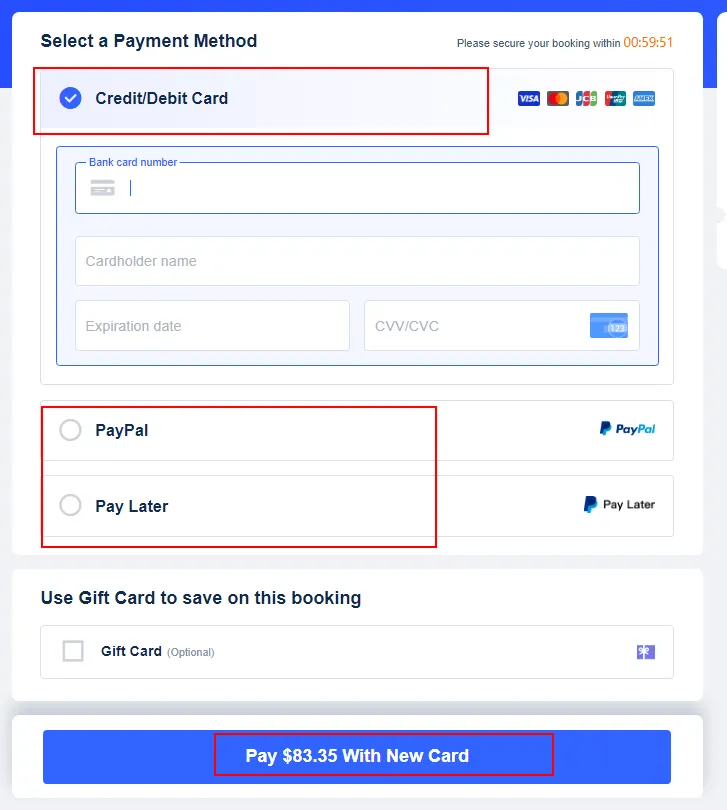
Insider Booking Tip: West Kowloon trains to Guangzhou, Shenzhen, and Guilin sell out rapidly on Friday afternoons and holiday weekends. I book my cross-border train tickets on Trip.com because it eliminates the 12306 identity-verification headache, accepts foreign cards seamlessly, and displays English/Chinese station names side-by-side—plus you earn Trip Coins to put toward boutique hotel stays!
If you plan on riding Chinese trains frequently, setting up an account on the official 12306 app or English website (12306.cn/en) can save you booking fees over time:
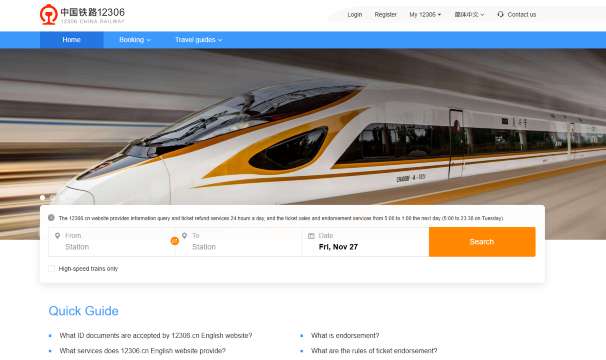
Source: 12306.cn/en
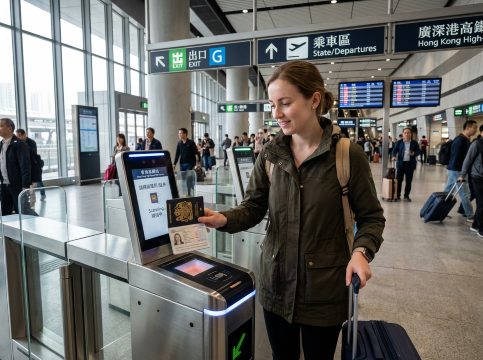
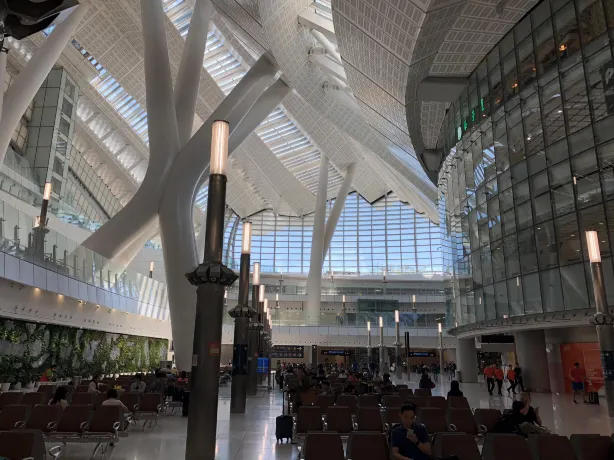
Boarding at Hong Kong West Kowloon Station works very differently from domestic train stations because the international border checkpoint sits directly inside the station complex.
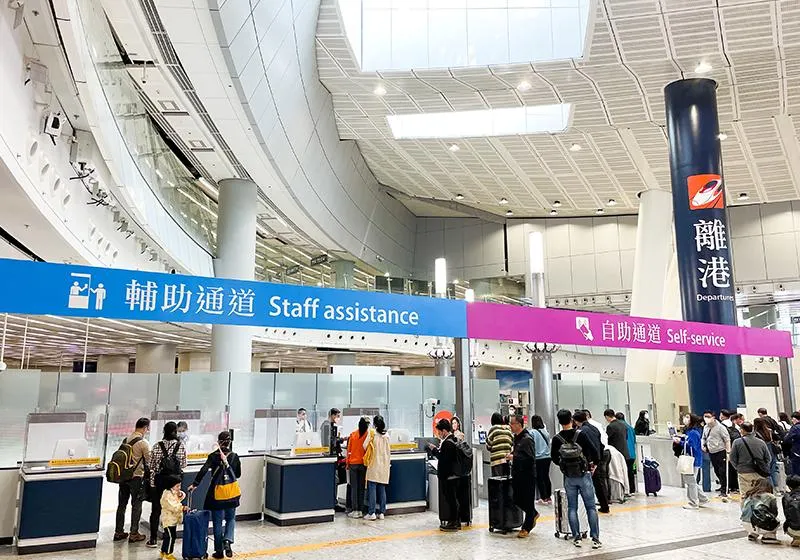
While MTR guidelines suggest arriving 45 minutes prior for local ID holders, international passport holders should arrive 60 to 90 minutes before departure—especially on weekends or public holidays. Here is the exact level-by-level sequence:
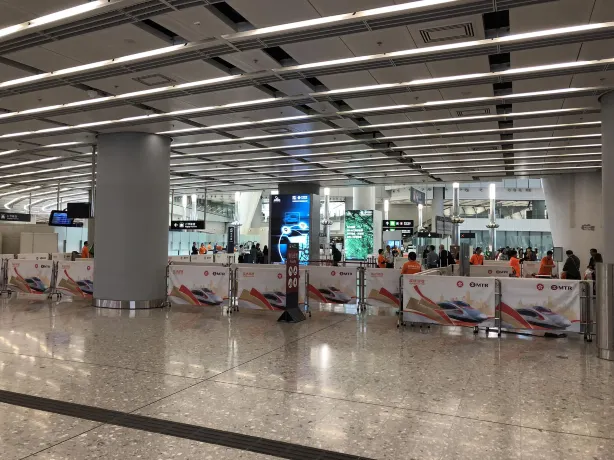
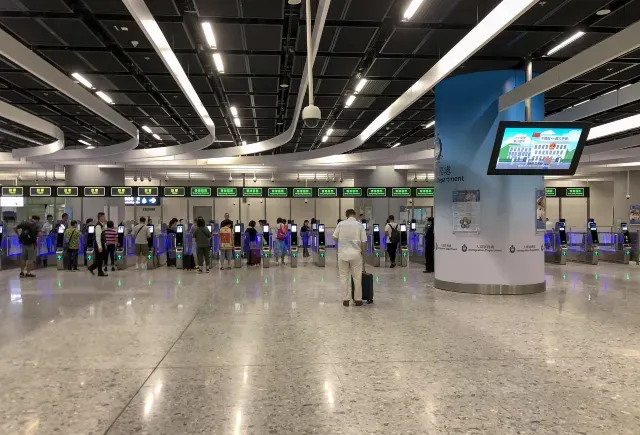
Hong Kong e-Channel at border control (Image source: Hong Kong High Speed Rail official website)
Every day, numerous high-speed trains depart from here to destinations across mainland China, with service reaching many provinces, municipalities, and autonomous regions.
Destination | Types of Trains | Journey time | Daily Train Schedule | Ticket Deals |
|---|---|---|---|---|
Shenzhen (Futian) | High-speed rail (G-series) | About 14 minutes | Frequent service, with departures almost every 10 minutes | |
Guangzhou | High-speed rail (G-series trains) | About 1 hour | Frequent service, with departures almost every 30 minutes | |
Xiamen | High-speed rail (G-series) | About 4 hours | Multiple departures, 4 to 5 per day | |
Chaoshan | High-Speed Rail (G Trains) | About 3 hours | Plenty of departures—almost every hour | |
Hangzhou | High-speed trains (G-series), overnight sleeper EMUs (D-series) | About 7 hours | 1 to 2 departures daily | |
Shanghai | High-speed trains (G-series), overnight sleeper EMUs (D-series) | About 8 hours | 1–2 departures daily | |
Beijing | High-speed trains (G-series), overnight sleeper EMUs (D-series) | About 8 hours | 1–2 departures daily |
 | 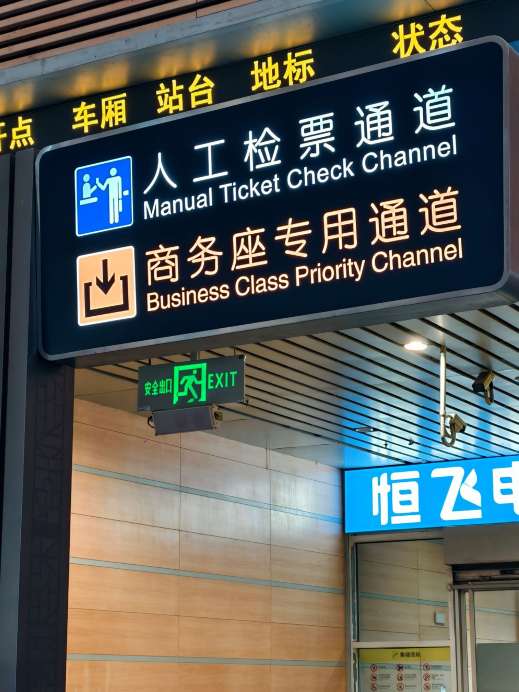 |
If you are travelling domestically between Mainland cities—say, Shanghai Hongqiao (上海虹桥) to Hangzhou, or Guangzhou South (广州南) to Guilin—here is what happens at the station:
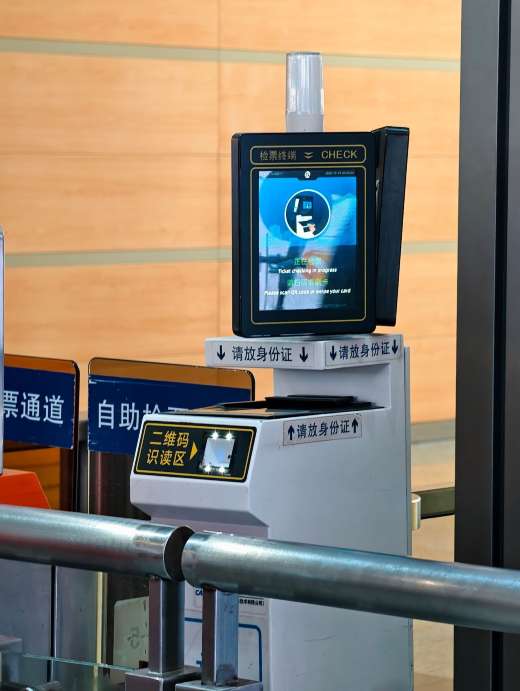
On paper, modern glass ticket barriers across Mainland China are equipped with optical passport scanners. In reality, not every automatic e-gate successfully reads every foreign passport chip.
If you tap your passport bio-page flat on the glowing scanner pad and the glass doors refuse to open—do not panic and do not assume something is wrong with your booking! That is completely normal.
Simply step out of the automated line and walk to the Manual Lane / Staffed Channel (人工通道), located at the far left or far right edge of every ticket barrier bank. Hand your original physical passport to the uniformed rail attendant. They will type in your last 4 digits or swipe the passport strip, verify your e-ticket on their tablet, and wave you straight through in five seconds.
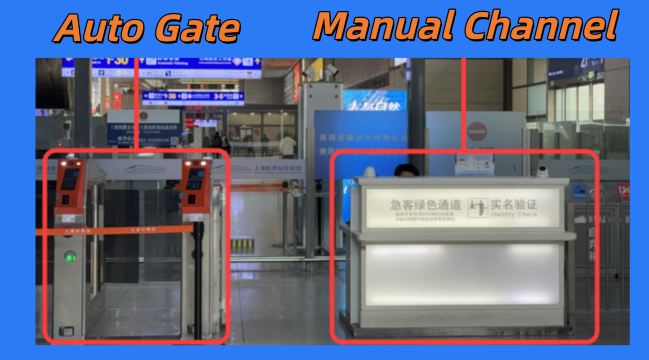
Source: China Guidelines
Keep your passport in an easy-to-reach pocket or crossbody bag throughout the ride. When you arrive at your destination station, you must pass through exit ticket barriers (出站口) using that exact same passport (or Manual Lane) to officially check out of the rail system.
If you are organizing a group outing from Hong Kong with colleagues, friends, or family, keep these logistical quirks in mind:
Once you understand that your passport is your digital ticket, navigating China and Hong Kong's high speed rail e-tickets becomes effortless. You skip airport security headaches, ride in spacious air-conditioned comfort, and arrive straight in the heart of cities like Guangzhou, Guilin, or Shanghai.
Next time you are planning an escape from Hong Kong, make sure your passport details match your booking letter-for-letter, grab your seats early via Trip.com before weekend routes sell out, and leave plenty of buffer time at West Kowloon Station. See you on the platform!
 已出售2372108