Trip.com 內地高鐵優惠券:立即享有 5% 折扣!
🔥 新用戶透過 Trip.com 訂購內地火車票、高鐵票可享 5% 優惠!🔥

Hey everyone! Planning a trip up north for a weekend getaway or a business trip? Curious about exploring the massive high-speed rail network but honestly feeling completely lost? I totally get it—looking at the China High-Speed Rail network map for the first time can feel like trying to solve a giant puzzle!
But don’t worry, I've got your back. Trip.com and I have teamed up to bring you the ultimate, fluff-free guide to navigating the mainland's high-speed rail system. We’ll cover the latest route expansions, travel times, and exactly how to secure your tickets without a hitch.
Let’s talk scale for a second. China Railway High-speed (CRH) is the absolute backbone of modern travel across the border. It’s hard to believe, but the national high-speed rail network has officially smashed past the 50,000-kilometre mark as of late 2025! That means China operates more high-speed tracks than the rest of the world combined.
The network is hitting some mind-boggling milestones:
Departure | Arrival | Average time | Distance | Book |
|---|---|---|---|---|
Guangzhou | Hong Kong | 1 hour | About 142 kilometres | |
Beijing | Shanghai | 4.5-6 hours | About 1,318 kilometres | |
Beijing | Guangzhou | 8-10 hours | About 2,298 kilometres | |
Chengdu | Chongqing | 1.5-2 hours | About 308 kilometres | |
Hong Kong | Shanghai | 11 hours | About 1,400 kilometres |
For us based in Hong Kong, getting across the border has literally never been easier. Forget the old days of endless transfers at Shenzhen. As of 2026, the MTR has massively expanded our direct network.
We now have direct, zero-transfer access to 110 destinations across the mainland straight from Hong Kong West Kowloon Station! This includes incredible additions like Nanjing South, Wuxi East, and Hefei South.
Also, if you love a weekend trip to Shanghai, the popular sleeper train service to Shanghai Hongqiao now operates as a nightly departure (instead of just weekends). Waking up fresh in Shanghai after a cozy overnight ride is an absolute game-changer.
Plus, the daily round-trips between Hong Kong and Guangzhou South run up to 24 pairs, making spontaneous day trips a breeze.
Here is a quick cheat sheet of the travel times for our favourite routes from Hong Kong West Kowloon:
Hong Kong High-Speed Rail Travel Times (Fastest) | ||
|---|---|---|
Hong Kong ↔ Shenzhen (Futian) | About 14 minutes | |
Hong Kong ↔ Shenzhen North | About 18 minutes | |
Hong Kong ↔ Guangzhou South | About 47 minutes | |
Hong Kong ↔ Guangzhou East | About 1 hour 42 minutes | |
Hong Kong ↔ Dongguan | About 1 hour 7 minutes | |
Hong Kong ↔ Guilin West | About 3 hours and 20 minutes | |
Hong Kong ↔ Wuhan | About 4 hours and 30 minutes | |
Hong Kong ↔ Shanghai | About 7 hours and 45 minutes | |
Hong Kong ↔ Beijing West | About 8 hours and 45 minutes | |
Hong Kong ↔ Tianjin West | About 10 hours | |
The Guangzhou–Shenzhen–Hong Kong High-Speed Rail connects Hong Kong, Shenzhen, and Guangzhou, with full operations beginning on September 23, 2018. Stretching 142 kilometres, it starts at Hong Kong West Kowloon Station, passes through Futian Station, Shenzhen North Station, Guangmingcheng Station, Humen Station, and Qingsheng Station, and ends at Guangzhou South Station.
As a key component of China’s high-speed rail network, it brings Hong Kong into the national system, making it easy for travelers to connect to major cities across the country. Better yet, it takes about 47 minutes from Hong Kong to Guangzhou South, and just 14 minutes to Shenzhen’s Futian Station—fostering economic cooperation among the Greater Bay Area’s major cities, shaping a convenient 1-hour living circle, and giving travelers a fast, hassle-free way to cross the border.
Spanning 142 kilometres, the Guangzhou–Shenzhen–Hong Kong High-Speed Rail includes Hong Kong West Kowloon Station, Futian Station, Shenzhen North Station, Guangmingcheng Station, Humen Station, Qingsheng Station, and Guangzhou South Station. Hong Kong West Kowloon Station is the world’s largest underground train station, with 15 platforms serving both long- and short-haul services.
Beyond the Guangzhou–Shenzhen–Hong Kong route, you can ride the Hong Kong high-speed rail to connect with over 60 cities across mainland China. You can also transfer at Shenzhen North Station or Guangzhou South Station to tap into the national high-speed rail network and zip to cities big and small across the country.
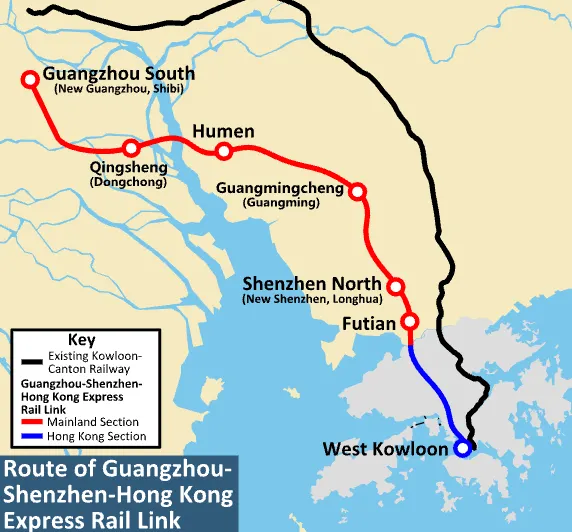
Credit: Wikipedia
High-Speed Rail Routes | Travel Time | Fare | Link to Book High-Speed Rail Tickets |
|---|---|---|---|
Hong Kong West Kowloon <--> Futian | 14 minutes | From HK$74 | |
Hong Kong West Kowloon <--> Shenzhen North | 18 minutes | From HK$82 | |
Hong Kong West Kowloon <--> Guangmingcheng | 30 minutes | From HK$104 | |
Hong Kong West Kowloon <--> Humen | 40 minutes | From HK$195 | |
Hong Kong West Kowloon <--> Qingsheng | 43 minutes | From HK$202 | |
Hong Kong West Kowloon <--> Guangzhou South | 47 minutes | From HK$236 |
With 110 direct stations now available, you can go almost anywhere in China without needing a transfer. Here are some of the most popular direct stations:
Short-Haul Stations |
|---|
Futian, Shenzhen North, Guangmingcheng, Dongguan South, Changping, Dongguan, Humen, Nanshabei, Guangzhouxintang, Guangzhou South, Guangzhou East. |
Long-Haul Stations |
|---|
Beijing West, Shanghai Hongqiao, Nanjing South, Wuxi East, Hefei South, Changsha South, Chengdu East, Chongqing West, Guilin West, Kunming South, Wuhan, Xiamen, Shantou South, Fuzhou South, Qingyuan, and many more! |
When you look at the China high-speed rail network map, the routes are broadly split by speed:
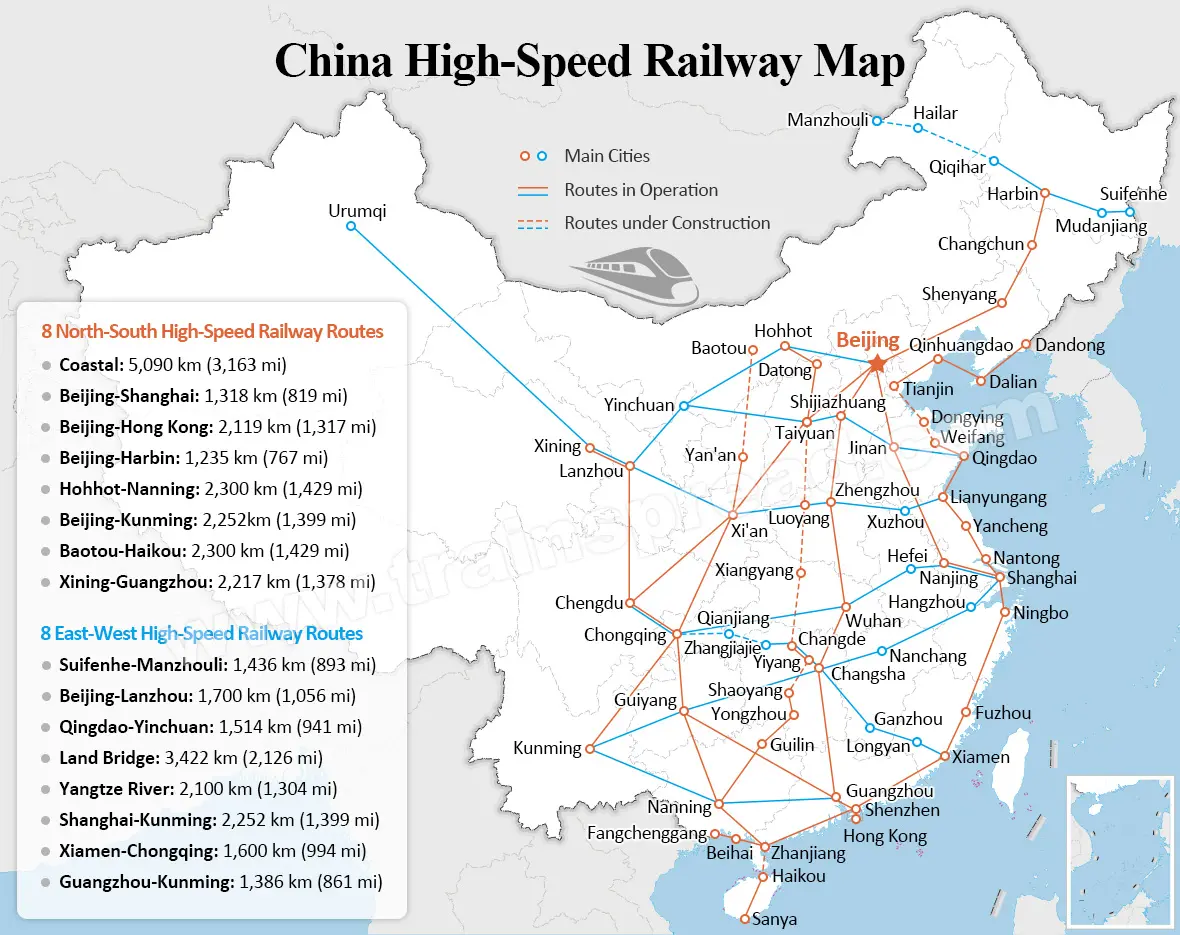
Credit: Train Speed
The backbone is the "Eight Vertical" (North-South) and "Eight Horizontal" (East-West) corridors. This layout is designed to create convenient 1-to-4-hour travel circles between adjacent major cities.
International trains currently in service also include:
Popular Routes | Major stations |
|---|---|
Beijing-Tianjin Intercity Railway | Beijing South Railway Station, Tianjin Railway Station |
Beijing–Shanghai High-Speed Rail | Beijing South Station, Tianjin West Station, Jinan West Station, Xuzhou East Station, Bengbu South Station, Nanjing South Station, Shanghai Hongqiao Station |
Guangzhou–Shenzhen–Hong Kong High-Speed Rail | Guangzhou South Station, Humen Station, Shenzhen North Station, Hong Kong West Kowloon Station |
Harbin–Dalian High-Speed Rail | Harbin West Station, Changchun West Station, Shenyang North Station, Dalian North Station |
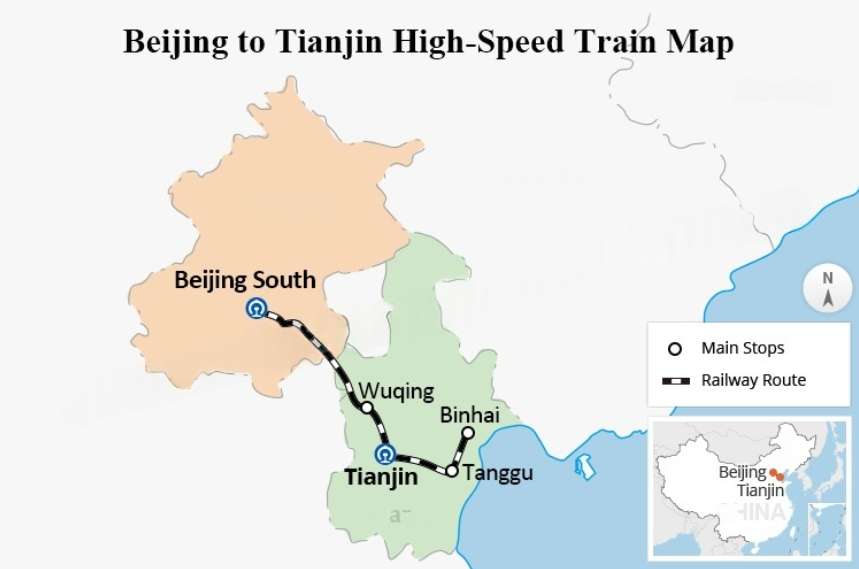
On the eve of the 2008 Beijing Olympics, the Beijing–Tianjin Intercity High-Speed Railway went into service. Spanning 120 kilometres with a design speed of 350 km/h, it cut travel time between Beijing and Tianjin—two centrally administered municipalities—from about two hours to roughly 30 minutes, bringing the cities closer together and accelerating their metropolitan integration.
It was not only China’s first high-speed rail line with independent intellectual property rights, but also one of the fastest operating high-speed railways in the world at the time.
Must-Visit Attractions in Beijing
Beijing Hotel Picks
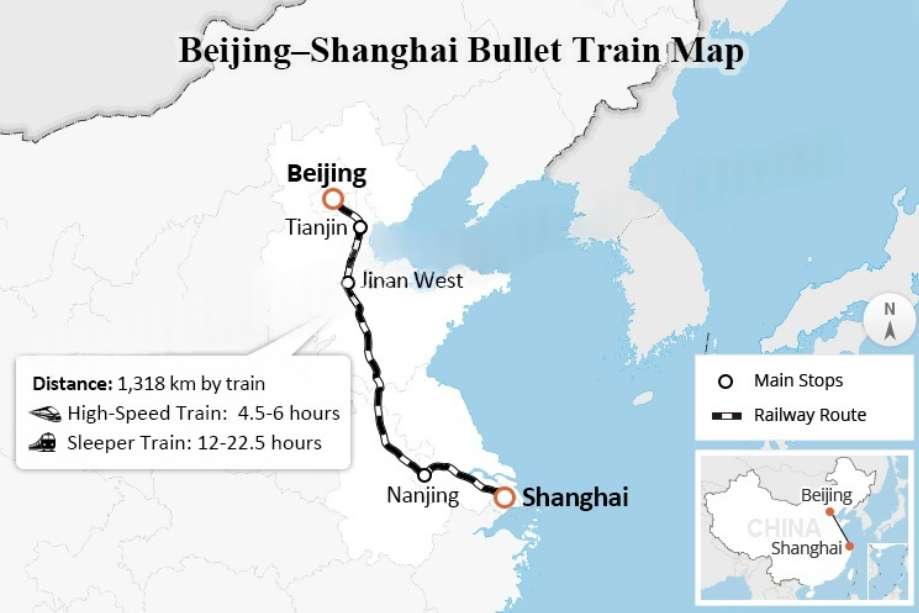
The Beijing–Shanghai High-Speed Railway has been in operation since 2011. At the time, it was the world’s longest high-speed rail line completed in a single project and built to the highest standards, stretching 1,318 kilometres with a design top speed of 350 km/h.
Linking Beijing, the country’s political and cultural heart, with Shanghai, its economic powerhouse, it passes through seven provincial-level regions—Beijing, Tianjin, Hebei, Shandong, Anhui, Jiangsu, and Shanghai—and can whisk travelers between the two cities in as little as four hours. In February 2013, total ridership on the line topped 100 million for the first time; by 2021, that figure had surpassed 1.3 billion.
Must-Visit Attractions in Shanghai
Shanghai Hotel Picks
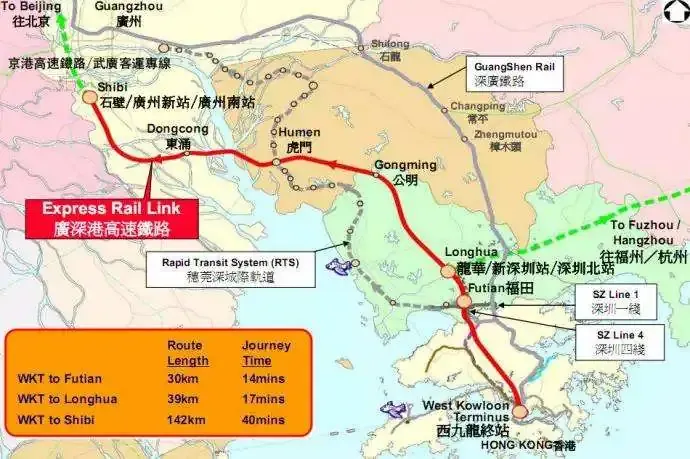
The Guangzhou–Shenzhen–Hong Kong High-Speed Rail links the bustling cities of Guangzhou, Dongguan, Shenzhen, and Hong Kong. It forms part of the Beijing–Guangzhou–Shenzhen–Hong Kong passenger-dedicated line within Mainland China’s “Four Vertical and Four Horizontal” high-speed rail network and serves as a backbone of the Pearl River Delta’s intercity rapid transit system. Trains reach speeds of up to 350 km/h (about 217 mph).
Must-Visit Attractions in Guangzhou
Guangzhou Hotel Picks
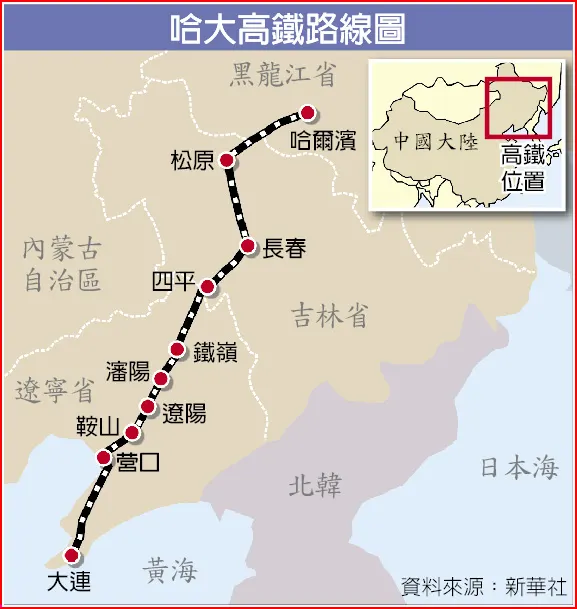
The Harbin–Dalian High-Speed Railway connects the vibrant cities of Harbin and Dalian. Spanning 904 kilometres, the section between Harbin West Station and Shenyang North Station forms a key part of the Beijing–Harbin Passenger-Dedicated Line.
Built with infrastructure designed for speeds of up to 350 km/h, this line exclusively operates high-speed electric multiple unit (EMU) trains, which maintain an average speed of over 200 km/h. The railway officially opened to travelers in December 2012.
Must-Visit Attractions in Harbin
Harbin Hotel Picks
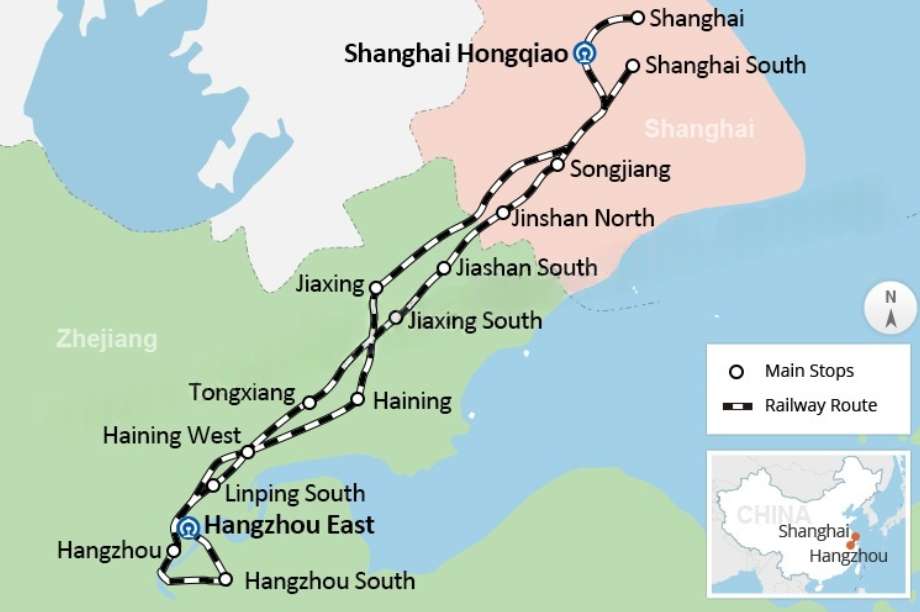
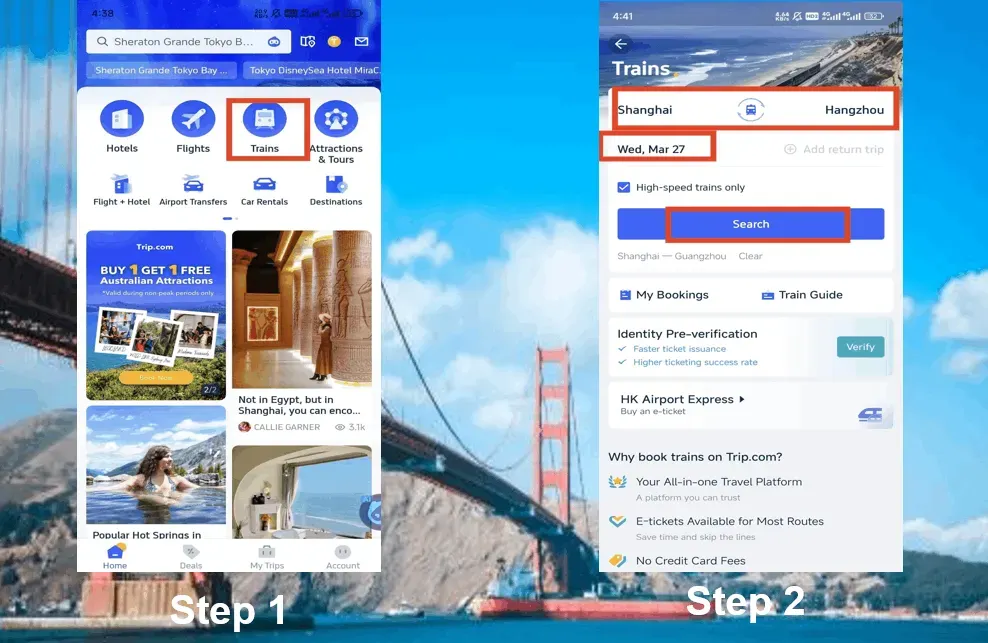
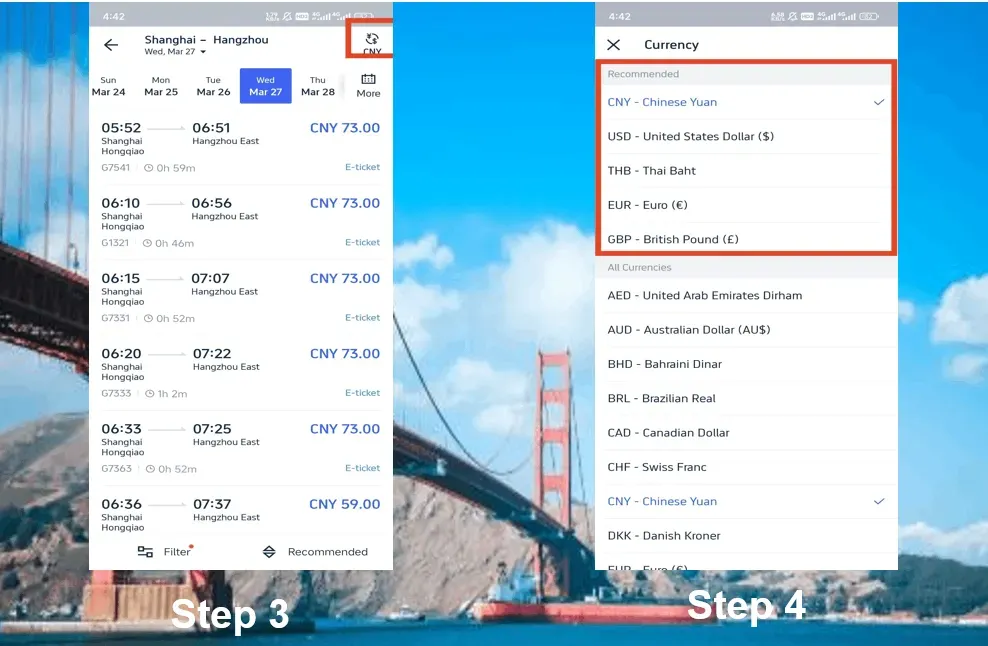
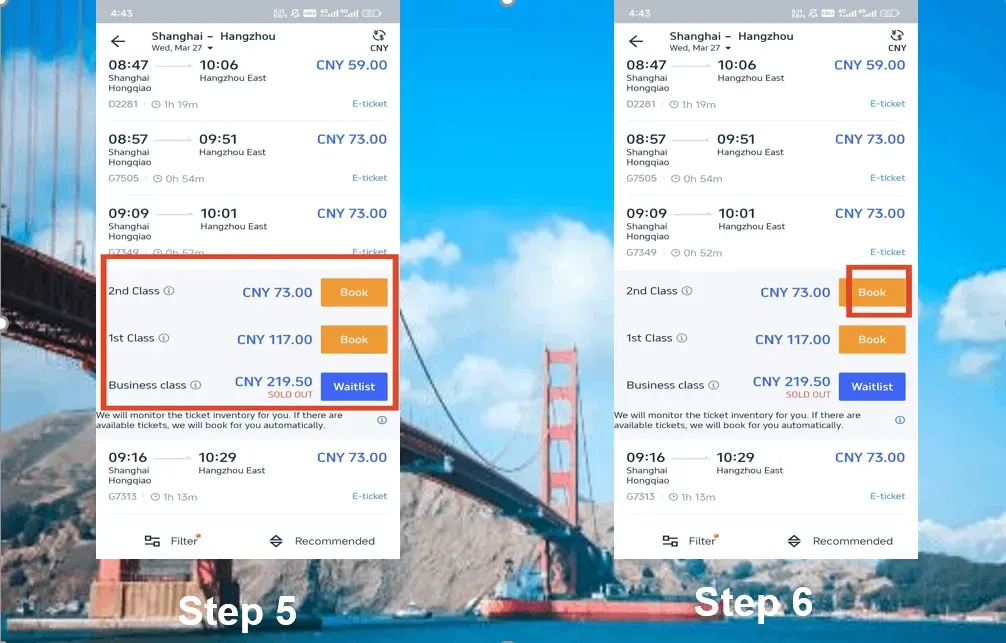
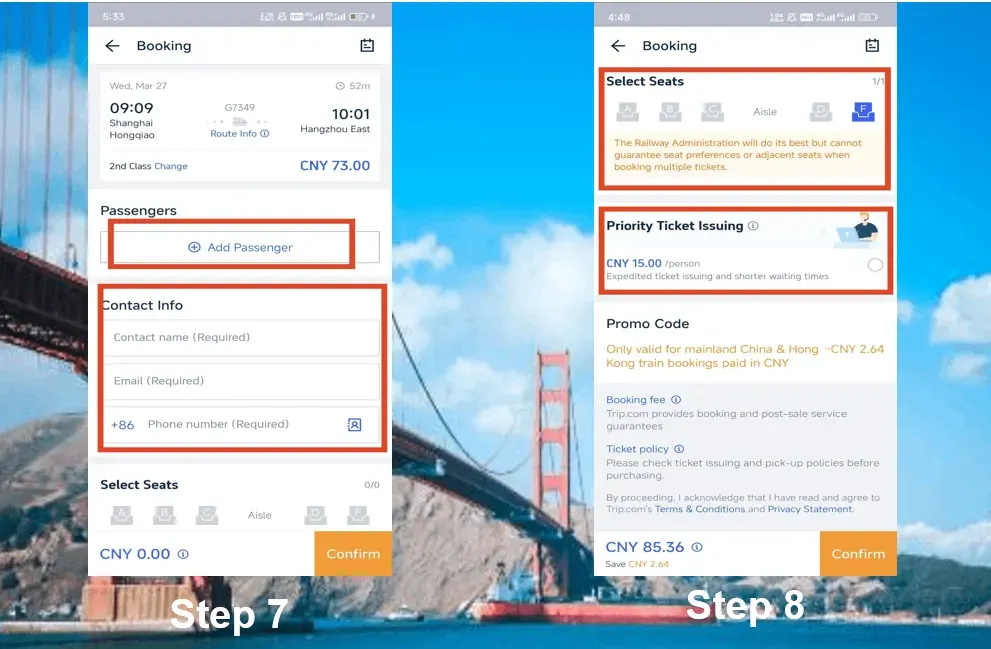
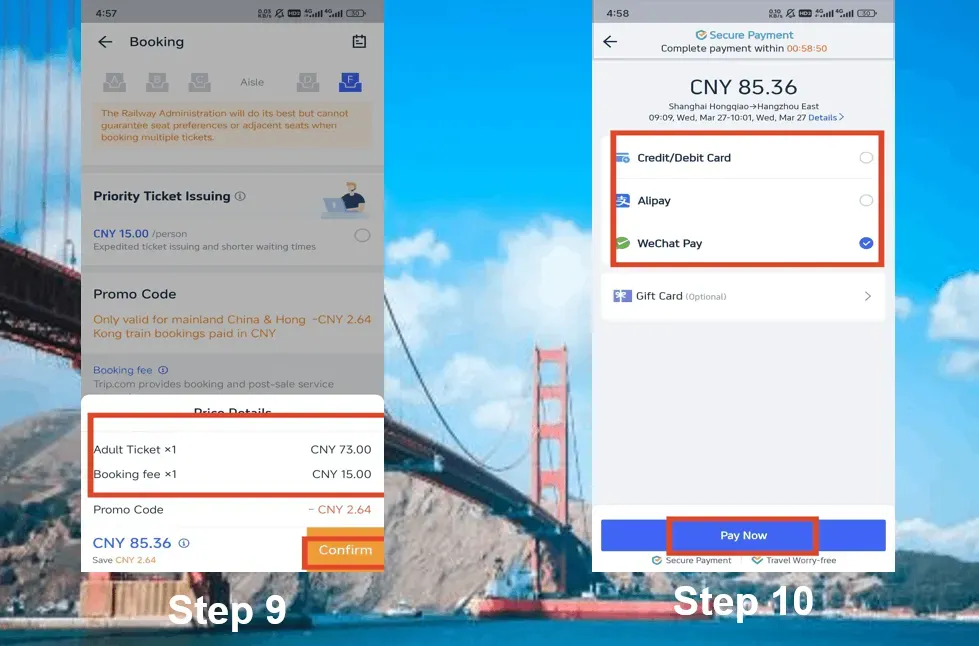
The Shanghai-Hangzhou High-Speed Railway whisks travelers between Shanghai and Hangzhou on a passenger-dedicated line from Shanghai Hongqiao Station to Hangzhou East Station.
Spanning 166 kilometers, it forms part of the Hukun Passenger-Dedicated Line within China’s “Four Vertical and Four Horizontal” high-speed rail network. Designed for a top speed of 350 km/h, it entered operation on October 26, 2010.
Must-Visit Attractions in Hangzhou
Hangzhou Hotel Picks
If your plans change, Trip.com makes it incredibly easy to manage bookings on the go. Your first ticket change is completely free of any service charges (subsequent changes carry a 5% fee).
If you need to cancel:
One last warning: Never intentionally overshoot your destination station! If you stay on the train past your ticketed stop without making prior arrangements, you'll be treated as travelling without a ticket and hit with a hefty surcharge at the other end.
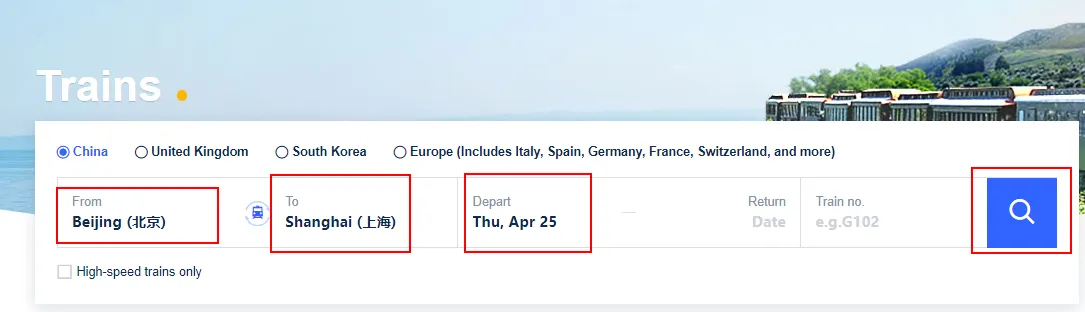
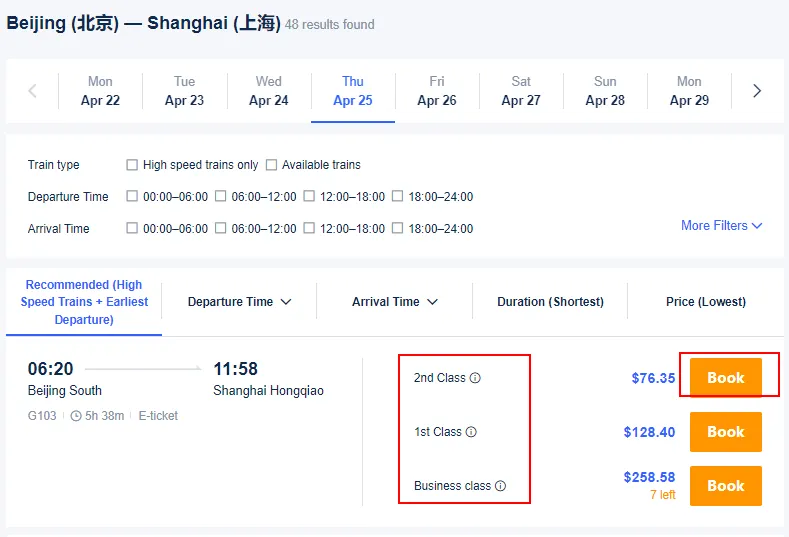
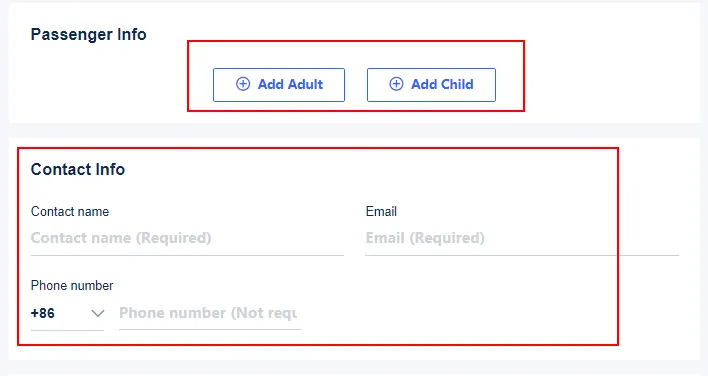
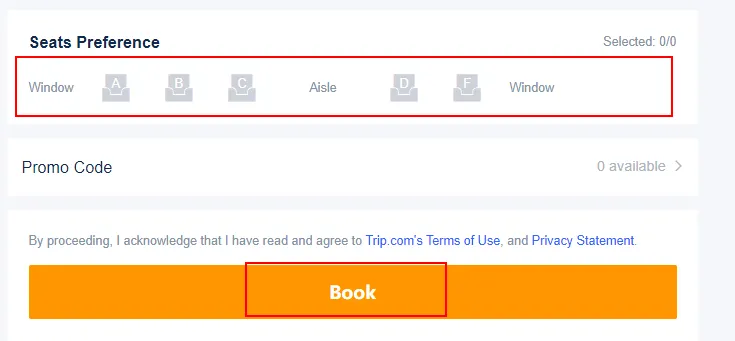

Ready to explore? Pull up the China high speed rail network map, lock in your tickets on Trip.com, and I'll see you on the tracks!